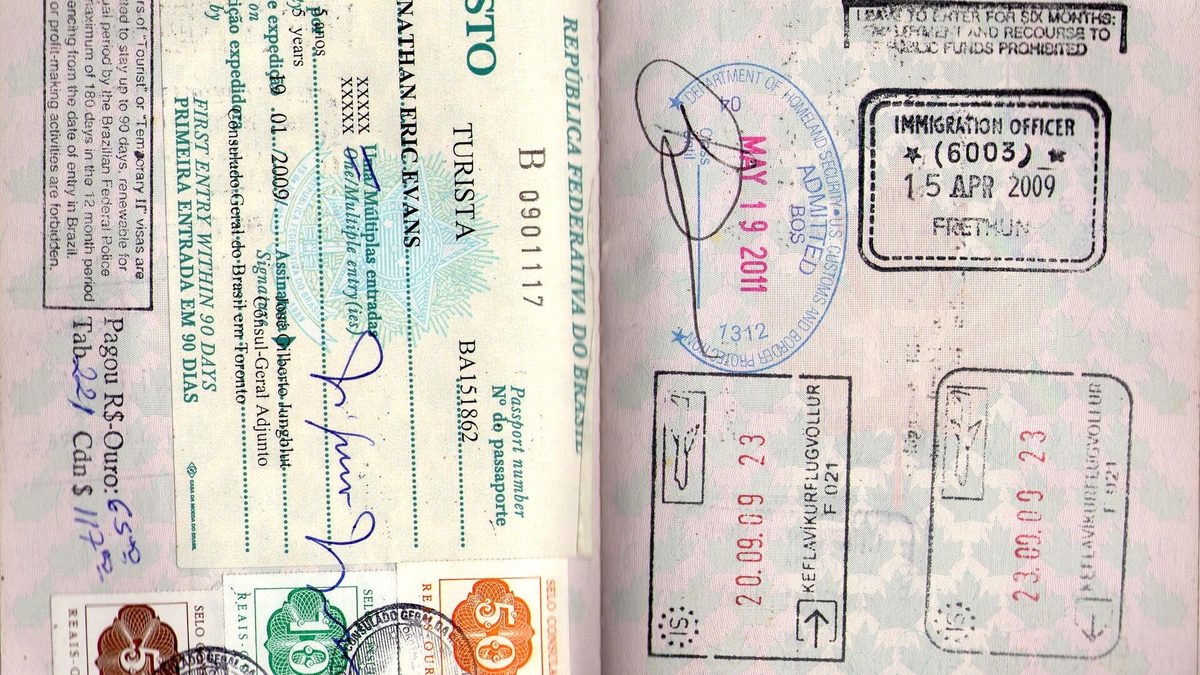

Ask most Bangladeshi families about study-abroad destinations and you'll hear the same five or six names on repeat — UK, Australia, Canada, maybe Malta if they've talked to us. Cyprus rarely comes up first. Yet over the past couple of years, a small but steady stream of Bangladeshi students has been landing in Nicosia, Limassol, and Famagusta, drawn by English-taught degrees, EU membership, and a visa process that — while it has its own quirks — doesn't carry the same refusal-rate anxiety as the UK route currently does.
Bangladeshi students submit Cyprus student visa files through VFS Global in Dhaka, but decisions are made by the Cyprus High Commission in New Delhi. After arrival you must register for the temporary residence permit ('Pink Slip') within days. Cyprus is in the EU but not yet in Schengen — plan your documents and timeline accordingly.
This guide walks through exactly how the Cyprus student visa process works for a Bangladeshi applicant in 2027: which visa category you need, who actually processes it (hint: it isn't Dhaka), what happens after you land, and the costs and rules that are genuinely confirmed versus the ones still floating around as agency folklore. We'll flag the difference clearly, because on a visa file, a confident wrong answer is worse than an honest "let's verify."
Why Bangladeshi students are starting to look at Cyprus
Cyprus has been a full EU member since 2004, and its universities run a large number of bachelor's and master's programmes taught entirely in English — a real draw for students who don't want to add a second language requirement on top of everything else. Tuition and living costs also tend to sit below Western Europe, which matters when a family is comparing options against Malta or Italy. None of that makes Cyprus a "backup" choice — it's a legitimate, EU-recognised destination that simply hasn't had the same marketing push in Bangladesh as the UK or Malaysia.
What it does have, though, is a visa process with a few genuinely unusual steps compared to Eduvisa's other four focus countries — and that's exactly where a student applying alone tends to lose weeks.
Which visa do you actually need, and who processes it?
Bangladeshi nationals need a long-stay national visa — officially a Category D visa — to study in Cyprus, regardless of how long the programme runs. This is confirmed by the European Commission's own EU Immigration Portal page for studying in Cyprus, which sets out the general framework all EU member states follow for non-EU students.
Here's the part that surprises most applicants: Cyprus does not have a resident embassy handling visa decisions in Dhaka. There's an Honorary Consulate of Cyprus in Dhaka, but the actual decision-making authority is the High Commission of the Republic of Cyprus in New Delhi, India, which has jurisdiction over Bangladesh. In practice, applicants submit their documents and biometrics through the VFS Global Cyprus Visa Application Centre in Gulshan-2, Dhaka, and the file is then forwarded to New Delhi for the actual visa decision.
VFS Global Cyprus Visa Application Centre, Delta Life Tower, 4th Floor, Plot #37, Road #90, Gulshan North, Gulshan-2, Dhaka-1212. Your file is then processed by the High Commission of the Republic of Cyprus in New Delhi — not locally in Dhaka. Confirm current opening hours and exact requirements with VFS before your appointment, as centre procedures can change.
You cannot start this process cold — you need a provisional or final admission letter from a Cyprus institution first. Once you have it, the university typically helps coordinate your visa appointment, since Cyprus universities are used to guiding international offices through the New Delhi routing.
The document checklist: what to gather before you apply
The exact document list can vary slightly by university and by VFS centre updates, so treat this as your starting checklist — not the final word. We review the specifics of every case individually before submission.
- Passport valid well beyond your intended stay, with blank visa pages
- Provisional or confirmed admission/acceptance letter from a Cyprus university
- Proof of tuition fee payment or a payment plan accepted by the institution
- Proof of sufficient financial means to cover tuition and living costs (see the cost section below — this figure is not yet fully standardised across sources)
- Academic transcripts and certificates, properly attested
- Valid health/travel insurance covering your stay
- Passport-size photographs meeting Cyprus visa specifications
- Completed Category D visa application form

You've landed — now the real process begins
Here's the step that catches almost everyone off guard: getting your Category D visa stamped in your passport is not the end of the Cyprus immigration process — it's the beginning of the next one. Once you arrive in Cyprus, you're required to register with the Civil Registry and Migration Department and obtain a temporary residence permit, commonly nicknamed the "Pink Slip."
Register within 7 days of arrival
Third-country nationals must register in the Aliens' Register and submit their temporary residence permit application within seven days of entering Cyprus on a Category D visa. This deadline is tight — plan your first week in Cyprus around it, not around settling into your dorm.
Submit your supporting documents
Expect to provide proof of financial means, a certificate of enrolment from your institution, valid health insurance, copies of your passport pages, and — this is the part students rarely anticipate — a medical certificate (covering tuberculosis, Hepatitis B and C, HIV, and syphilis) issued within the last 4 months, plus a police clearance certificate from Bangladesh issued within the last 6 months.
Wait out the processing window
Processing commonly takes around 3–4 months. During this period you're generally allowed to remain and study in Cyprus, but keep proof of your submitted application on you at all times in case of an ID check.
Renew annually alongside your enrolment
The permit is typically issued for one year and renewed each year you remain enrolled, so this isn't a one-time task — it repeats for the length of your programme.
What it actually costs (and the one number nobody agrees on)
Costs are where we have to be most careful, because different agencies and blogs quote different figures, and not all of them cite where the number comes from.
The Category D visa application fee is commonly reported in the roughly €60–€70 range, and the temporary residence permit (Pink Slip) registration is commonly reported around an additional €70, with renewal costs in a similar band. These figures appear consistently across multiple visa-process guides, but we have not yet independently matched them against a single, current, official Cyprus government fee schedule — treat them as a solid planning estimate, not a locked-in number.
The minimum bank balance or "proof of financial means" figure quoted by different Bangladesh-market sources ranges roughly from BDT 10 lakh to BDT 12 lakh. That's a wide enough spread that we will not repeat either number to you as fact. Your actual required amount depends on your specific university, programme length, and living-cost assumptions used by the reviewing office — this is exactly the kind of number we verify case-by-case before you spend a taka on notarising a bank statement.
| Factor | Cyprus | Malta | Italy |
|---|---|---|---|
| EU member | Yes | Yes | Yes |
| Schengen Area member | Not yet (target now 2027) | Yes | Yes |
| Visa processed locally in Dhaka | Filed via VFS Dhaka, decided in New Delhi | Yes | Yes, via Embassy of Italy, Dhaka |
| English-taught degree availability | Widely available | Widely available | Growing, but more limited than Cyprus/Malta |
Can you work while you study?
International students in Cyprus are commonly reported to be allowed part-time work — up to around 20 hours per week during term time, with fuller hours permitted during official holiday periods. This is broadly consistent with how most EU countries structure student work rights. That said, the exact conditions (which sectors, whether a separate work permit or employer registration is needed) can be tied to the specific terms of your residence permit, so this is a question we confirm against your actual permit conditions rather than a blanket yes.
Cyprus, the EU, and the Schengen question
This is a distinction that trips up a lot of students and even some agencies: Cyprus is a full EU member, but as of July 2026 it is still not part of the Schengen Area. Cyprus has publicly targeted 2026 for accession, with technical evaluations largely complete and a Council decision reportedly expected before the end of the year — but until that formally happens, a Cyprus residence permit does not, by itself, give you visa-free travel across the Schengen zone the way a Malta or Italy permit does.
The mistakes that get Cyprus applications refused or delayed
Missing the 7-day post-arrival registration window, submitting a medical certificate or police clearance certificate that's already outside its validity window by the time it reaches the Migration Department, and financial documents that don't match the specific figure your university's admissions office actually expects — these three account for the majority of delays we see referenced across Cyprus visa guides. None of them are exotic problems; they're timing and documentation issues that a second set of eyes catches before submission, not after a rejection letter.
How Eduvisa stays with you after you land
This is really where Cyprus separates the agencies that just get you a visa stamp from the ones that actually see you through. The Category D visa is step one. The Pink Slip registration, the 7-day clock, the medical and police clearance timing, the annual renewal — that's a second, ongoing process most competitors quietly hand back to the student the moment they board the flight.
We don't disappear at the airport. From helping you understand what the Migration Department will actually ask for, to timing your medical and police clearance so they're still valid when you register, to flagging your annual renewal before it becomes urgent — this is the post-arrival support that most Bangladesh-market consultancies simply don't offer once your visa is stamped.
Related guides: Cost of living in Cyprus • Top universities in Cyprus
Thinking about Cyprus but not sure it's the right fit?
Every family's situation is different — your budget, your programme choice, and your timeline all change what "the right documents" actually means for you. Come talk to us and we'll walk through your specific case, honestly, before you spend a single taka on notarisation or translation.
Book Free Consultation →