
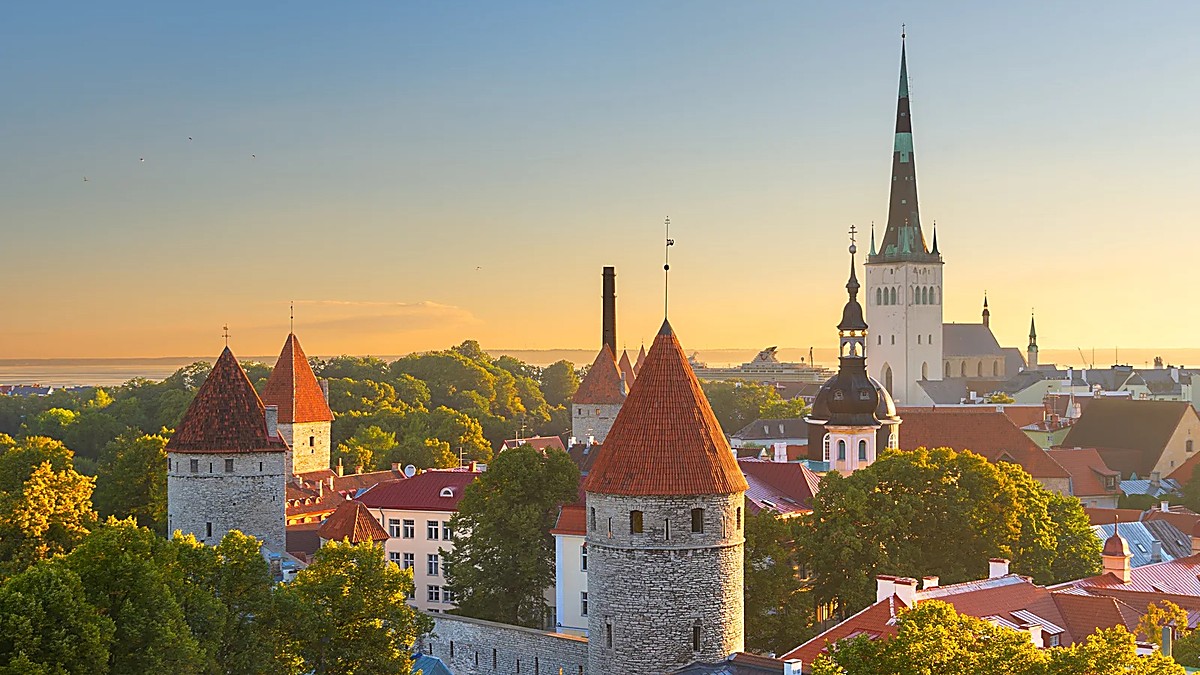
Every year a handful of Bangladeshi students land in Tallinn, register their address online in about ten minutes, and start riding the city's buses for free. Estonia runs one of the most digital states in Europe, tuition at many universities starts near EUR 1,500 a year, and international students face no legal cap at all on how many hours they may work. So why do so few Bangladeshi files ever make it? Because the route to an Estonia student visa from Bangladesh has two quiet traps that most agency pages never mention — and both of them sit outside Bangladesh.
Bangladeshi students cannot get an Estonian long-stay (D) study visa in Dhaka. Germany's Embassy in Dhaka issues short-stay Schengen visas for Estonia only; every study application goes to the Estonian Embassy in New Delhi. The D visa state fee is EUR 120, and for the residence permit you must confirm income of EUR 880 per month in 2026.
Do you need a student visa for Estonia, or a residence permit?
You will very likely need both, one after the other. This is the part that confuses most applicants, so it is worth getting straight before you spend a single taka.
Estonia's Police and Border Guard Board (PPA) explains the sequence in its official Student Guide, updated on 9 July 2026. First you apply for a long-stay (D-type) visa at an Estonian foreign representation. That visa gets you into Estonia and covers roughly your first year. Then, if your studies last longer than one year, you apply for a temporary residence permit for study — which the PPA issues for the full nominal length of your programme, up to five years.
The residence permit is the real permission to live in Estonia. The D visa is only the door.
A genuine conflict between two official Estonian sources. The PPA's July 2026 Student Guide says the residence permit application is submitted at a PPA service office inside Estonia after you arrive. The Estonian Embassy in New Delhi's own residence-permit page says a person staying longer than one year "must apply for a TRP at the Embassy, and travel to Estonia after receiving the TRP card from the Embassy" — and that page is dated 28 May 2023. Both are official. Ask the Embassy directly which sequence applies to your programme before you plan flights, and get the answer in writing.
Where does a Bangladeshi student actually apply for an Estonia student visa?
In New Delhi — not in Dhaka. This is the single most expensive misunderstanding in the whole process.
Estonia has no embassy in Bangladesh. For short-stay Schengen visas, the Estonian Embassy in New Delhi states on its own page for Bangladeshi, Nepali and Sri Lankan citizens that residents of Bangladesh apply through the German Embassy in Dhaka, which represents Estonia. Many agency pages stop reading there and tell students to go to Dhaka.
The very next line on that page is the one that matters: "Important notice: it is not possible to apply for a long-stay visa (D-visa) in these Embassies." A study visa is a D visa. Germany's Dhaka mission cannot take it. Your file goes to the Estonian Embassy in New Delhi, C15 Malcha Marg, Chanakyapuri, New Delhi 110021.

- Consular section open Monday, Wednesday and Thursday; telephone hours Tuesdays and Fridays 14:30–16:30 on +91 11 4948 8659.
- Applications are accepted by appointment only, booked at broneering.mfa.ee. The Embassy says booking is free of charge and must be made personally.
- The name in the booking must match the name in the passport — the Embassy states it "has a right to delete incorrect bookings".
- In the comment field you must add your citizenship, your pre-filled visa application number and the reason, for example "D visa to study at [university name]".
- The interpreter rule: if you do not speak or understand Estonian, English or Hindi, the Embassy requires you to bring an interpreter with you.
How much money do you need to show for Estonia in 2027?
For the residence permit, EUR 880 per month per applicant in 2026. That figure comes straight from the PPA Student Guide dated 9 July 2026, and it is four times Estonia's subsistence level, which the State Budget Act resets every year. It went up from EUR 800 in 2025, so budget for another rise before a 2027 intake.
You should treat any lower number you see on a Bangladeshi agency page with suspicion. Figures like "EUR 600 a month" or "about EUR 6,000 a year" are circulating widely and they are below what the PPA actually asks you to confirm.
| Item | Official amount | Approx. BDT |
|---|---|---|
| D visa state fee | EUR 120 | ৳17,160 |
| Residence permit fee | EUR 225 | ৳32,180 |
| Income to confirm, monthly | EUR 880 | ৳1,25,850 |
| Income to confirm, one year | EUR 10,560 | ৳15,10,000 |
| Document legalisation, each | EUR 30 | ৳4,290 |
| Tuition, typical range | EUR 1,500–15,000/yr | ৳2.15–21.45 lakh |
| Living cost, monthly | EUR 300–500 | ৳42,900–71,500 |
BDT figures use EUR 1 = ৳143.01 (exchangerate-api.com, 30 August 2026) and are our estimates for planning only. Fees and the subsistence level are set in euro and change; confirm both before you transfer any money.
One detail agency pages skip: the D visa document list in the 2026 guide asks for bank statements covering the three months before you apply. If a sponsor is funding you, the Embassy wants a sponsor letter plus that sponsor's own three months of statements. A single lump sum parked in an account the week before your appointment is exactly the pattern that draws questions.
Does the Bangladesh apostille work for Estonia?
No — and this is where a lot of Bangladeshi files quietly fall apart.
The 1961 Apostille Convention entered into force for Bangladesh on 30 March 2025, and for most European destinations that replaced the old consular legalisation chain. Estonia is one of the twelve countries that formally objected to Bangladesh's accession, lodging its objection under Article 12(2) on 16 January 2025. An objection means Estonia will not accept a Bangladeshi apostille at all. Estonia also has legal-aid agreements that waive certification with only Lithuania, Latvia, Poland and Ukraine — Bangladesh is not on that list.
Estonia's Ministry of Foreign Affairs publishes a short list of countries whose documents need an extra legalisation at a specific foreign mission before the Estonian MFA will touch them. The first name on that list, on a page last updated 11 February 2026, is:
"Bangladesh – Embassy of Bangladesh in Copenhagen."
So the chain for a Bangladeshi certificate destined for Estonia runs: issuing board → Bangladesh MOFA → Bangladesh Embassy in Copenhagen → Estonian mission or the Estonian MFA Consular Department in Tallinn. The state fee is EUR 30 per document, processing takes five working days, the Tallinn consular reception is closed so documents go by post only, and legalised documents are returned by registered mail to an Estonian address — which means you need someone in Estonia, usually your university, to receive them.
This is not a reason to give up on Estonia. It is a reason to start your documents months earlier than you would for Poland or Latvia, and to sequence them in the right order the first time. Getting that sequence wrong is what costs students an intake.
What does it cost to study and live in Estonia?
Less than most of Western Europe, and the official national portal is unusually blunt about it.
Study in Estonia, the government portal run by the Education and Youth Board, puts bachelor's and master's tuition at EUR 1,500 to 15,000 per year, with medicine, law, business administration and social sciences at the expensive end. All doctoral studies in Estonia carry no tuition fee, and some universities offer a small number of tuition-free bachelor's and master's programmes plus fee waivers. Exact fees appear next to each programme in the national admission system at estonia.dreamapply.com.
That admission portal is worth understanding, because it is generous: through DreamApply you can apply to up to two programmes at one university and up to five universities — ten programmes on a single application. Some universities charge an application fee, paid once per university.
- Public transport is free in Tallinn for registered residents, and that includes international students studying in Tallinn. It is tied to registering your address in the Population Register — which you are legally obliged to do within one month of getting your residence permit anyway. In Tartu a monthly student ticket is EUR 7.67.
- Dormitories are the real saving. The portal quotes EUR 150–350 a month in dormitories against EUR 350–750 in private flats. Apply for a dorm place at the same time as you accept your offer, not after you land.
The official living-cost page contradicts itself: it gives an average student cost of EUR 300–500 a month, then says food alone is around EUR 300. It also cites a student survey from 2019. Treat EUR 300–500 as an optimistic floor for a careful student in Tartu, and budget closer to the EUR 880 the PPA asks you to confirm.
Can you work while studying in Estonia?
Yes, with no separate work permit — and Estonia is the rare European country that sets no legal cap on student working hours. The Study in Estonia portal states it plainly under its quick facts: working hours for international students are "not limited".
Before that sounds too good, read the condition attached to it. The PPA grants a study residence permit for full-time study. Full-time in Estonia means passing roughly 30 ECTS credits per semester and finishing within the nominal duration of your programme. Work as much as you like, as long as your results never slip.
Straight from the PPA Student Guide of 9 July 2026: "The study-based residence permit ends 30 days from the moment student falls behind with the studies or interrupts the studies. According to the legislation it happens automatically."
Automatically. No warning letter, no hearing. A student who takes on too many shifts, fails a semester and loses 30 ECTS can be out of status a month later. Unlimited work hours and an automatic cancellation clause are two halves of the same rule.
What happens after you graduate in Estonia?
You get nine months in Estonia to find a job, and then a genuinely favourable work-permit route that Estonia does not advertise loudly enough.
Study in Estonia confirms that all non-EU students may stay for an additional nine months after graduation to look for work and apply for a temporary residence permit for employment. Processing that work permit takes about a month, so start well before the nine months run out.
The part worth remembering: since 1 September 2013, graduates who earned a bachelor's, master's or PhD in Estonia apply for the work residence permit under special conditions. Their employers do not have to meet the strict salary requirement that applies to other foreign hires, and they do not need permission from Eesti Töötukassa, the Estonian Unemployment Insurance Fund. In practice that removes the two biggest reasons a small Estonian employer says no to hiring a non-EU candidate.
The salary figures on the national portal are ageing — average gross pay is quoted from 2023 and the minimum wage from 2024. Use them for orientation, not for a budget.
What are the biggest reasons a Bangladeshi student loses an Estonia place?
At Eduvisa we see the same pattern across every European route we research: students lose intakes on sequencing and paperwork, almost never on academic merit. Estonia punishes bad sequencing harder than most because two of its steps happen in other countries.
Document checklist before your New Delhi appointment
- Passport valid well beyond the intended stay, plus the completed and signed D visa application form
- One colour photograph to Estonian document-photo specification
- University acceptance letter naming the programme and level
- Health insurance valid for the whole stay — any provider, it need not be Estonian
- Bank statements for the three months before applying, plus sponsor letter and sponsor statements if applicable
- Scholarship award letter, if you hold one
- Data form on close relatives and family members, the additional form and biographical data
- Travel ticket reservation to Estonia — required when applying at a foreign representation
- EUR 120 for the state fee, paid as the Embassy directs
- Criminal record certificate from every country you lived in for three consecutive months or more in the past three years, for the residence permit stage
The PPA runs migration consultants who answer foreigners' questions directly, at no cost: +372 612 3500, Monday to Friday 09:00–15:00 Estonian time, or [email protected]. If a rule in this guide has changed since publication, they are the people who will know first.
Related guides: Latvia student visa from Bangladesh 2027 · Czech Republic student visa from Bangladesh 2027 — Czechia also objected to Bangladesh's apostille accession, so the same legalisation problem applies there.
Official sources used in this guide: the Estonian Police and Border Guard Board and the Estonian Ministry of Foreign Affairs legalisation page.
Please note: this guide is blog research published for Bangladeshi students, not a statement that Eduvisa currently processes applications for Estonia. Visa rules, fees and subsistence levels change without notice — verify every figure with the Estonian Embassy in New Delhi or the PPA before acting on it.
Not sure whether Estonia is the right fit for your budget and grades?
That is exactly the conversation we like having. Bring your transcripts, your funding picture and your timeline, and we will walk through which European route genuinely fits you — and stay with you after you land, not just until the visa is stamped.
Book Free Consultation →