
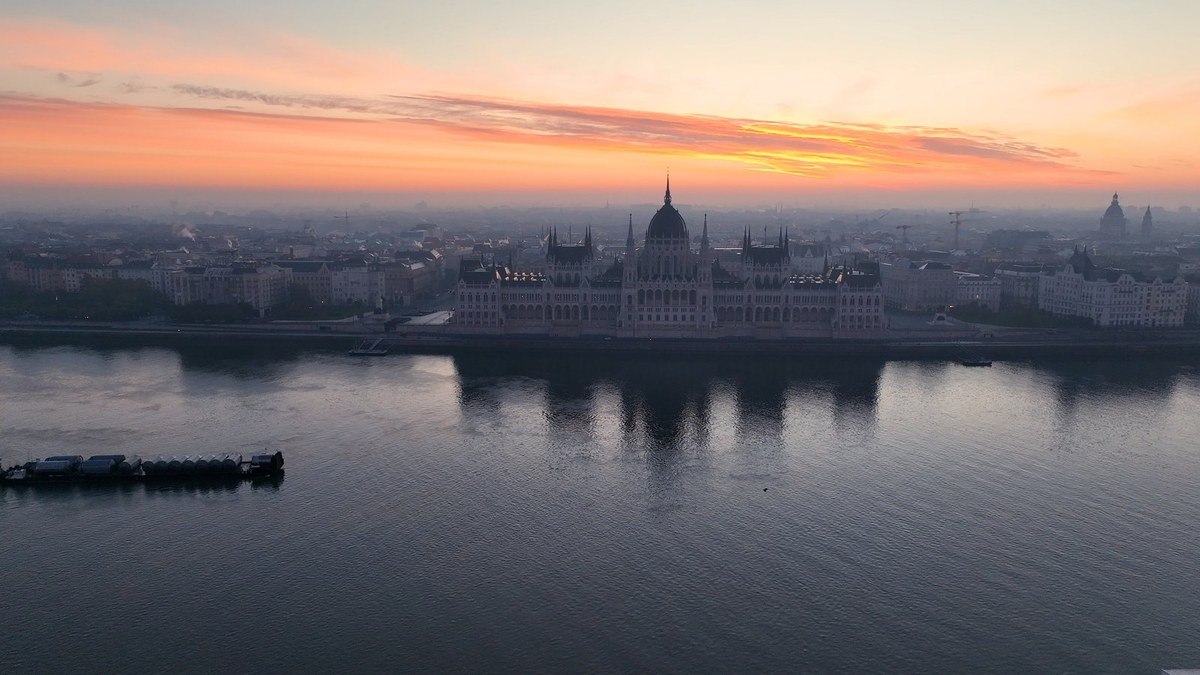
Every January a small number of Bangladeshi students quietly pack for Budapest on a scholarship most of their classmates have never heard of. They pay no tuition, they get a dormitory bed or money towards rent, and they did not borrow a taka to make it happen. The programme is called Stipendium Hungaricum, it is run by the Hungarian government, and Bangladesh sits on its list of sending countries. What stops most people is not the competition — it is that the deadline passes in the middle of January, months before the crowd starts thinking about September intakes.
Stipendium Hungaricum is a Hungarian government scholarship that waives tuition, pays a monthly stipend of HUF 43,700, and gives you a free dormitory place or HUF 40,000 a month towards accommodation. Bangladesh is a listed sending country for bachelor's, master's and one-tier master's degrees. The 2026/27 call closed on 15 January 2026; the 2027-28 call is not published yet.
What exactly does Stipendium Hungaricum pay for?
It covers the three costs that sink most self-funded plans: tuition, housing and health cover. The official Call for Applications for the 2026/2027 academic year — published by the Tempus Public Foundation on stipendiumhungaricum.hu — states an "exemption from the payment of tuition fee", a monthly stipend, "free dormitory place (depending on institutional capacity) or a contribution of HUF 40,000/month", and health care under Hungarian legislation plus supplementary medical insurance up to HUF 65,000 (about EUR 165) per person per year.
The stipend itself is set by study level. For non-degree, bachelor's, master's and one-tier master's programmes the call gives a "monthly amount of HUF 43,700". Doctoral awards run on a different and higher schedule, published in the separate doctoral call.
Read that dormitory line twice. It says depending on institutional capacity. A scholarship holder whose university has no free bed does not lose the award — they receive HUF 40,000 a month instead, which is a contribution towards rent, not a rent cheque.
HUF 40,000 a month is roughly ৳15,300. In Budapest, a room in a shared flat generally costs a good deal more than that, and Hungarian landlords normally want a deposit plus the first month up front. Plan for the gap between the contribution and the real rent before you accept a place, not after you land.
Is Bangladesh eligible, and which degrees can you apply for?
Yes. Bangladesh has its own country page on the official Stipendium Hungaricum site, and that page lists full-degree bachelor's studies, full-degree master's studies and full-degree one-tier master's studies, each described as available "in any field of interest". That phrase matters: several sending countries are restricted to named subject areas, and Bangladesh is not.
What the Bangladesh page does not publish is a number of places. There is no visible quota, no "X scholarships for Bangladesh" line, and no named nomination body on the version of the page we could read on 27 September 2026. Some sending countries route applications through a government nomination step in addition to the online application; others do not. We are not going to guess which arrangement applies to Bangladesh in the next cycle, because guessing wrong costs a student an entire year.
Verify before you rely on this: the place quota and the nomination route for Bangladesh are not published on the country page. Confirm both against the 2027-28 call the moment it appears, and with the sending partner named in that call. Figures on this page were read at source on 27 September 2026.
What is the real application deadline for the 2027-28 intake?
The honest answer is that it does not exist yet. As of 27 September 2026 the only live call on stipendiumhungaricum.hu is for the 2026/2027 academic year, with a deadline of "15th January 2026, 2 pm (CET)". There is no 2027/2028 call, no 2027-28 deadline and no 2027-28 stipend schedule published anywhere on the official site.
What you can plan around is the shape of the cycle, which has been stable. The published 2026/27 timetable ran like this:
| Stage | Timing | Confirmed? |
|---|---|---|
| Application deadline | 15 January 2026, 2 p.m. CET | Published |
| Entrance exams | March – May 2026 | Published |
| Results | Around end of June 2026 | Published |
| Studies begin | September 2026 | Published |
| 2027-28 equivalent dates | Not announced | No |
So the working assumption for a student targeting Hungary in 2027-28 is a mid-January 2027 deadline with results by roughly the end of June 2027 — and that is our reading of a repeating pattern, not a date Hungary has published. Treat it as a planning aid. Build your transcripts, language certificate and motivation letter so they are ready by December 2026, and you will be safe whichever week the real deadline lands on.

How much is the stipend worth in taka, and is it enough?
At the Wise mid-market rate of 1 HUF = 0.3832 BDT on 27 September 2026, the published amounts convert like this. The taka column is our arithmetic on Hungary's forint figures, not an amount Hungary quotes:
| Item | Forint | Taka (approx.) |
|---|---|---|
| Monthly stipend | HUF 43,700 | ৳16,700 |
| Housing contribution | HUF 40,000 / month | ৳15,300 |
| Medical insurance cap | HUF 65,000 / year | ৳24,900 |
| Stipend + housing, monthly | HUF 83,700 | ৳32,000 |
A scholarship holder who gets a dormitory bed keeps the full HUF 43,700 for food, transport, phone and books, and that is a workable student budget in a Hungarian university town. A holder paying market rent in Budapest on HUF 83,700 is going to feel it. The difference between those two outcomes is institutional dormitory capacity — which is exactly why the university you list on your application matters as much as the programme.
The Stipendium Hungaricum application is submitted in Hungary's own online system at no cost. If an agency in Bangladesh quotes you a fee to "submit" or "unlock" the application, you are being charged for something the Hungarian government gives away. Paying someone to check your documents is a legitimate service; paying for access to the form is not.
Who qualifies, and what does the call ask you to submit?
The 2026/27 call set an age floor rather than a ceiling: applicants born after 31 August 2008 were excluded, which in practice meant you had to be 18 by 31 August 2026, with an exception for dance programmes. Language requirements are set by each host institution rather than centrally — English-taught programmes ask for the institution's own minimum, and Hungarian-taught programmes need either B2 Hungarian or completion of the compulsory one-year Hungarian preparatory course.
The document set in the published call is short by European standards:
- Completed online application form in the official system
- Motivation letter
- Proof of language proficiency for your chosen programme
- School certificates
- Academic transcripts
- Identification document
- Signed statement of acceptance
- Medical certificate and any programme-specific extras named by your host institution
How do you actually apply, step by step?
Does a Bangladeshi apostille work for Hungary?
Yes, and this is one of the few places where the news for Bangladeshi applicants is unambiguously good. Bangladesh joined the 1961 Hague Apostille Convention with effect from 30 March 2025. Hungary has been a party since 18 January 1973, and Hungary is not among the twelve contracting parties that objected to Bangladesh's accession. So a single apostille from the competent Bangladeshi authority is the recognised route for your certificates and transcripts, rather than the older chain of ministry attestations followed by embassy legalisation.
That matters practically: an apostille is one step with one fee, and it removes a bottleneck that used to cost applicants two or three weeks in December — precisely the weeks they need for the January deadline.
The objection list was read on the HCCH notifications register on 25 September 2026. Objections can be lodged at any time, so re-check the register for Hungary before you pay for legalisation, and keep the receipt.
What does Stipendium Hungaricum not cover?
Four things, and every one of them has ended a plan that only budgeted for tuition.
Flights. The published package does not include airfare in either direction. The visa and residence permit. Winning a scholarship is an academic decision; entering and staying in Hungary is a separate immigration process with its own documents, fees and appointments. The first month. Deposits, a transport pass, bedding, a local SIM and the wait for your first stipend payment all land before any money arrives. Insurance beyond the cap. Supplementary cover is capped at HUF 65,000 a year; anything above that is yours.
We have seen students treat the award e-mail as the finish line and start the immigration paperwork in August. Hungary's national residence procedure for study has its own timeline and its own document list, and it does not speed up because your classes start next month. The award is the reason to begin, not the reason to relax.
What we see at Eduvisa
The students who win fully funded places are almost never the ones with the most spectacular grades. They are the ones whose file was finished in December, whose transcripts were legalised while everyone else was still deciding whether to apply, and whose motivation letter reads like it was written for one specific department. The paperwork is not the boring part of a scholarship application — for a January deadline, it is the application. That is the part we sit down and do with a student, line by line, because it is where a year is won or lost.
Official sources for this guide: the Stipendium Hungaricum application pages and Call for Applications (Tempus Public Foundation), and the HCCH Apostille Convention status table.
Related guides: Study in Hungary from Bangladesh · Hungary student visa from Bangladesh
This guide is blog research for Bangladeshi students. It is not a statement that Eduvisa currently processes applications for Hungary. Ask us and we will tell you plainly what we do and do not handle.
Not sure whether your file is strong enough for a January deadline?
Bring us your transcripts and we will tell you honestly — which programmes are realistic, what your legalisation timeline looks like from Bangladesh, and what has to be finished before December. No sales pitch, no guesswork.
Book Free Consultation →