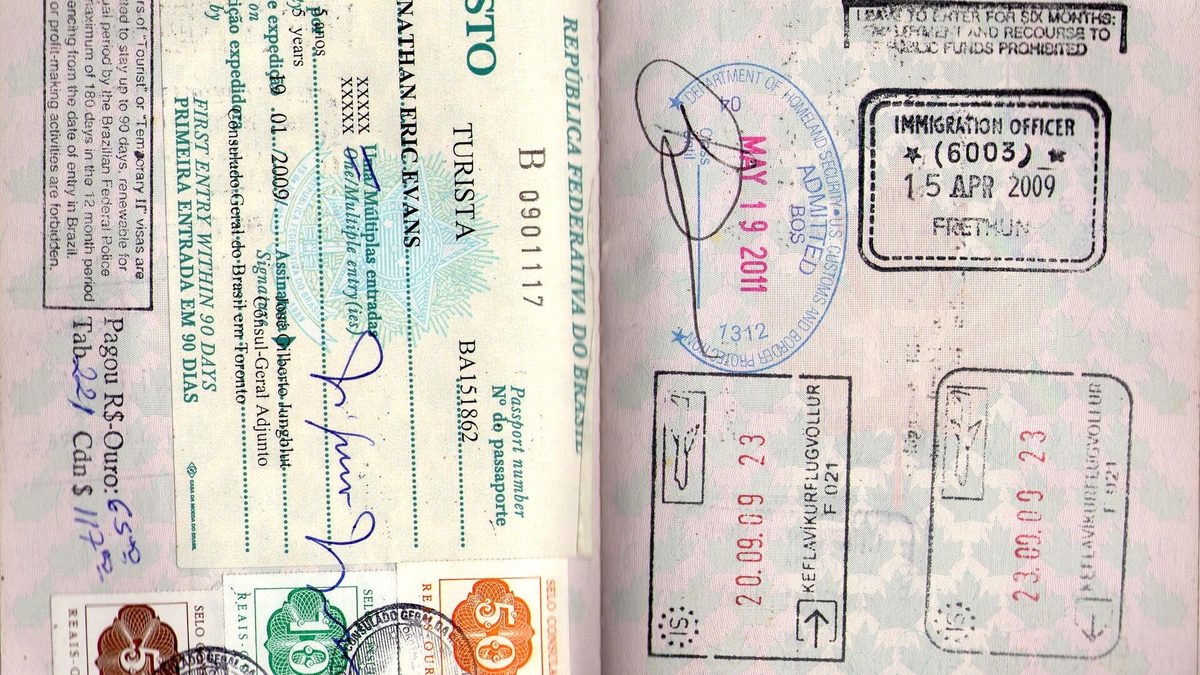

Most students land at KLIA thinking the hard part is over. The visa is approved, the eVAL is printed, the family has said goodbye at Hazrat Shahjalal. Then, within about a fortnight, three separate counters ask you for the same passport — a clinic, a bank, and your own university’s international office — and only one of them can have it at a time. Getting a bank account and SIM in Malaysia as a Bangladeshi student is not difficult. Getting them in the wrong order is what costs people six weeks.
To settle in Malaysia, a Bangladeshi student must sit an EMGS panel-clinic medical screening within 7 working days of arrival, then open a bank account with the original passport and an institution letter before surrendering the passport for student pass endorsement. A prepaid SIM needs the original passport in person, and the i-Kad arrives only after endorsement.
What must a Bangladeshi student do in the first 7 days in Malaysia?
Five things, in a specific order: clear immigration on your eVAL, sit the medical screening, open a bank account, register a SIM, and only then hand your passport to your institution for endorsement. Four of those five need your original passport in your own hand, which is why the fifth has to come last.
Education Malaysia Global Services — EMGS, the Ministry of Higher Education body every international student application passes through — sets the clock. Its guidance is blunt: new international students must attend a medical screening at a panel clinic in Malaysia within 7 working days of their arrival date. Universities then layer their own deadline on top. Monash University Malaysia, for example, tells students to complete the screening and submit the passport to its International Student Pass office within seven days of arrival.
EMGS states that your compulsory medical insurance runs from the date you enter Malaysia if you inform your institution of that date as soon as you arrive. Students who wait a week to send the email can leave themselves with days of unclear cover — and those are exactly the days you are travelling to a new clinic in a new city.
Why is the post-arrival medical screening non-negotiable?
Because without it, nothing downstream can move. EMGS says plainly that it will not be able to initiate the student pass endorsement process, or issue the supporting letter for sticker endorsement, if a student fails to undergo the in-country screening. No screening means no endorsement, no endorsement means no i-Kad, and an unendorsed passport is a passport you cannot travel on.
The screening itself is ordinary: a general health examination by a certified doctor, with blood and urine tests, at an EMGS-appointed clinic or hospital. You keep the original acknowledgement receipt from the clinic — your institution will ask for it along with your passport. Students renewing an existing pass are exempt. Students already in Malaysia who change course or institution, or progress to a higher level, must screen again if their last in-country screening was more than 90 days before the new application.
Why should you open your Malaysian bank account before handing over your passport?
Because your passport is about to disappear for weeks, and no bank in Malaysia will open an account without seeing the original. Monash’s own instruction to arriving students says it in one line: submit your passport to the pass office immediately after the medical screening, and ensure that you have opened a bank account prior to submitting your passport for endorsement. That single sentence is the most valuable thing in this article.
Students who get this wrong end up in a stalemate that feels absurd from the outside. The passport is at the international office. The bank needs the passport. The landlord wants the deposit by bank transfer. The part-time tuition money from home is sitting in a remittance app with nowhere to land. It resolves itself when the endorsed passport comes back — but that can be a month or more, and it is a month spent paying for everything in cash.

What documents do banks in Malaysia actually ask an international student for?
The original passport, and a letter from your institution. Beyond that, requirements vary bank to bank and branch to branch, which is why arriving with a thick folder beats arriving with an argument.
There is one document many students have never heard of. Since October 2021, EMGS has allowed education institutions to generate a verification letter for the bank directly from its STARS system, once the Immigration Department has issued the student pass. It confirms to the bank that your pass is genuinely approved and names your current institution. Your institution downloads it — you have to ask for it. Certain banks will not proceed without it.
- Original passport, with the entry stamp and, once issued, the student pass sticker
- Introduction or confirmation letter from your international office, on letterhead
- EMGS verification letter for the bank, printed by your institution from STARS
- Offer letter and proof of current enrolment
- Your local address, and any tenancy agreement or bill in your name
- A local mobile number that is already registered and working
How do Malaysia’s 2026 SIM registration rules change things for foreign students?
They make it stricter, and they make it an in-person job. The Malaysian Communications and Multimedia Commission registered a new Mandatory Standard for the Registration of End Users of Public Cellular Prepaid Services on 26 February 2026, under sections 55 and 104(1)(b) of the Communications and Multimedia Act 1998, replacing the 2017 guidelines it had operated under for nearly a decade.
Three parts of it matter to you. Non-citizens are limited to two prepaid SIM cards per mobile operator, against five for Malaysian citizens and permanent residents. Customers must present original identification documents at registration — copies, scans and photographs of a passport are no longer permitted, so the photo of your passport in your phone gallery is not going to work. And foreign nationals are verified by facial recognition against the passport, which means you have to be physically present at a service centre; the self-registration route through a telco app runs on MyDigital ID, Malaysia’s national digital identity, which you will not have.
One more detail worth knowing before you buy anything at the airport: tourist prepaid SIMs are now capped at three months of validity and terminate automatically after that. If a counter offers you a “tourist pack” on the way out of arrivals, understand what you are buying — it may die halfway through your first semester.
What is the i-Kad, and what does it not let you do?
The i-Kad is your Malaysian identity card as a student: a biometric card carrying your photo and details, issued after your student pass has been endorsed in your passport. Its application is submitted alongside the student pass application, so it is not a separate errand — it simply arrives at the end of the chain.
Its value is that it lets you stop carrying your passport. Monash describes the i-Kad as the only substitute identification document for foreign nationals recognised by the Immigration Department in Peninsular Malaysia, and instructs students to keep it on them at all times. If a police officer asks for identification, this is what you produce.
Its limits are just as important. The i-Kad is not a travel document. It does not work for international travel, and it does not work for travel between Peninsular Malaysia and Sabah or Sarawak — those journeys are immigration crossings and need the passport. And while your passport is with your institution for endorsement, you should not be planning to leave the country at all; you carry the acknowledgement of receipt for the passport instead, and you wait.
A lost or damaged i-Kad needs a police report before it can be replaced. On the published Monash schedule, damage or a first loss costs RM150, a second loss RM300, and a third or subsequent loss RM500 — roughly ৳4,500 to ৳15,100. There is also a separate special pass, usually valid 14 to 30 days and costing around RM100, which you will need if you change course or institution while a new student pass is being approved.
What does the first year actually cost — pass, i-Kad, insurance and screening?
More than students budget for, because these fees sit outside tuition and outside rent. The table below uses one university’s published breakdown of a 12-month student pass, which comes to roughly RM2,515 all in. Your institution’s figures will differ, but the line items will not.
| Item | Amount | Approx. BDT | Status |
|---|---|---|---|
| EMGS application processing | RM1,060 | ৳31,960 | One university’s figure |
| Student pass fee | RM60 | ৳1,810 | One university’s figure |
| eVAL fee | RM159 | ৳4,790 | One university’s figure |
| i-Kad | RM50 | ৳1,510 | One university’s figure |
| Multiple entry visa | RM50 | ৳1,510 | One university’s figure |
| Medical screening | RM250 | ৳7,540 | One university’s figure |
| Medical insurance, 12 months | RM884 | ৳26,650 | One university’s figure |
| Typical bundle, 12-month pass | RM2,515 | ৳75,830 | One university’s figure |
Conversions use RM1 = ৳30.15 (open.er-api.com, 13 August 2026). Rates move daily, so treat the taka column as indicative.
Insurance is the one line you can partly choose. EMGS publishes the 2026 premiums for the three approved providers, and the differences are real:
| Provider | Plan | Cover | Premium | GP deductible |
|---|---|---|---|---|
| Etiqa | Plan 2 | RM30,000 | RM498 | RM50 |
| Etiqa | Plan 3 | RM50,000 | RM567 | RM50 |
| Great Eastern | Regular | RM30,000 | RM547 | Waived |
| Great Eastern | Premium | RM50,000 | RM640 | Waived |
| Pacific | Gold | RM30,000 | RM551 | RM25 |
| Pacific | Platinum | RM50,000 | RM644 | RM25 |
Premiums are per annum, for students aged 16 to 70, as published by EMGS for 2026. Cover is the maximum limit per disability. Note what the deductible column does to the cheapest plan: RM50 out of pocket at every GP visit adds up fast for a student with a chest infection and a Malaysian monsoon.
Valid medical insurance is compulsory for the entire period of study. If your cover expires before your student pass does, EMGS requires you to top up or extend it — enough to reach the expiry of your existing pass, or a maximum of 12 months from the insurance start date, whichever is lower. A lapsed policy is a problem at renewal time, not just at the clinic.
How much cash can you bring from Bangladesh, and how should the rest move?
You may carry up to the equivalent of USD 10,000 in cash and bearer negotiable instruments into or out of Malaysia without declaring it. At or above that figure, the Royal Malaysian Customs Department requires a declaration on Customs Form No. 7, available at customs counters at every entry and exit point, under the Anti-Money Laundering and Anti-Terrorism Financing Act 2001. At today’s rate USD 10,000 is roughly RM40,900, or about ৳12.3 lakh — well within the range a family might hand over for a first year, so this is a real threshold, not a theoretical one.
The larger money should not travel in a suitcase at all. Bangladesh Bank’s Guidelines for Foreign Exchange Transactions place student remittances with your authorised dealer bank, and the rules there shape your paperwork more than most students realise. Forex is released against the institution’s own estimate of expenses, for a maximum of one academic year at a time, with each later release needing a current progress report and a fresh estimate. Tuition is issued in favour of the institution itself, not to you. And every purchase for the whole course must go through a single AD branch — the file stays with the bank and is never handed to the student, even on transfer.
Bangladesh Bank’s guidelines allow health and medical insurance fees to be remitted where the institution’s documents show that they are mandatory. In Malaysia they plainly are — EMGS makes insurance compulsory for every international student. So ask your institution to itemise the EMGS insurance premium, the medical screening fee and the student pass fees as separate lines in the estimate it sends you, rather than folding them into a single tuition figure. It is a small request that lets your AD bank release those amounts cleanly instead of asking you to find them in cash after you land.
What we see at Eduvisa
The same three failures, every intake. A student sends the passport to the international office on day two because they want to be diligent, and then spends five weeks unable to open an account or sign a tenancy. A student buys a SIM from an airport counter without asking what kind of registration it is, and finds the line dead in November. And a family sends the full year’s money as one lump against a single tuition figure, leaving the insurance premium and screening fee to be paid in ringgit that nobody planned for.
None of these are visa problems. Every one of them is a sequencing problem, and sequencing is the part no checklist on a university website is written to solve, because each office only sees its own counter. That is the work we do with students in the fortnight around departure — and the reason we stay reachable after you land, rather than closing the file at the airport.
Email your arrival date before you fly
Your insurance cover and your pass office both key off it. Send it the day the ticket is booked, not the day you land.
Book the panel clinic for day two or three
Seven working days sounds generous until orientation week eats it. EMGS publishes the panel clinic list, and its app will find the nearest one.
Ask for the EMGS bank verification letter
Your institution generates it from STARS. Request it in the same email in which you confirm your arrival, so it is ready when you walk into the branch.
Bank first, SIM second, passport last
Both the bank and the telco want the original passport in your hand. Finish with them before the endorsement queue takes it.
Keep every receipt
The clinic acknowledgement, the passport receipt from your pass office, the SIM registration slip. Each one is the proof some later counter asks for.
Related guides: Malaysia student visa process, step by step and the real cost of living in Malaysia for Bangladeshi students. If you are planning to work alongside your studies, read our guide to part-time work rules in Malaysia before you accept anything. Official sources used here: EMGS medical screening guidance and the Royal Malaysian Customs traveller’s guide.
Arrive with the order already decided
Send us your offer letter and your flight date, and we will map your first fortnight against your own institution’s rules — which clinic, which branch, which letter to ask for and when your passport can safely leave your hands. We will also help your family shape the bank estimate so nothing has to be paid twice. One conversation, no charge.
Book Free Consultation →