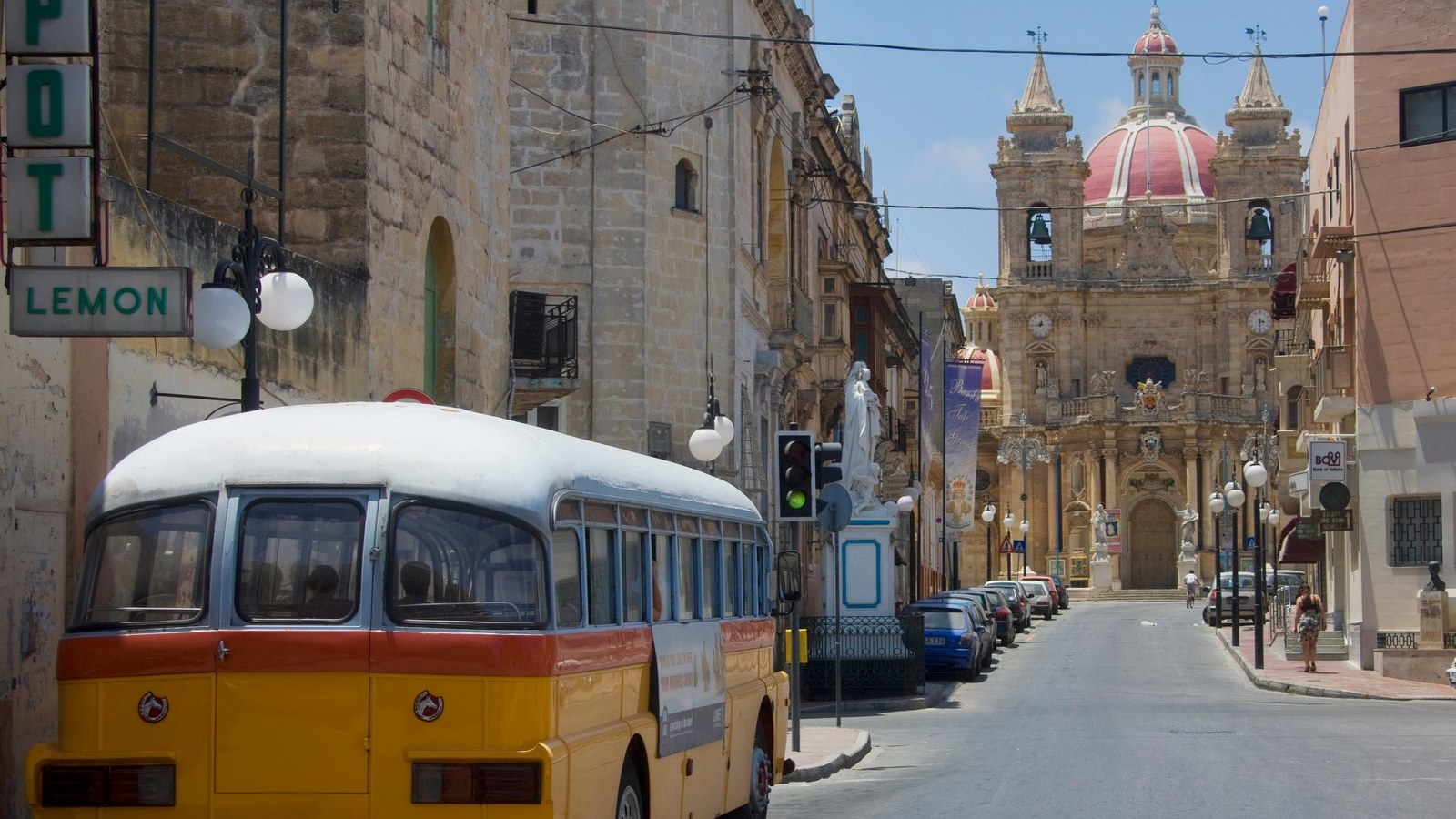

Msida at eight in the morning smells of sea salt and diesel. Buses queue three-deep along the creek, the ferries to Sliema push out past the yacht masts, and a stream of students walks up the hill to a campus where roughly one person in four is from somewhere else. Malta is the smallest country in the European Union, and that single fact shapes almost everything about student life in Malta for Bangladeshi students — how far you travel, how quickly people recognise your face, how fast a small community becomes your family.
Student life in Malta for Bangladeshi students is small-island life: English is an official language so you can study and handle paperwork without Maltese, buses are free once you hold a personalised tallinja card (€25 to register, about two weeks to arrive), most students live in shared flats around Msida, Gżira and Sliema, and halal food and a mosque are available in Paola. Budget roughly €900–€1,200 a month.
This guide covers what daily life actually looks like — language, housing districts, transport, health cover, food, societies and the culture shocks that catch most students in the first month. Everything below was checked against Maltese government and university sources on 1 August 2026, and where a figure could not be confirmed we say so plainly.
Do you need to speak Maltese to study and live in Malta?
No. Under Article 5 of the Constitution of Malta, both Maltese and English are official languages of the country, and the administration may use either for all official purposes. Laws are enacted in both. Your lectures, your exams, your bank forms, your residence-permit paperwork and your doctor's appointment can all happen in English.
There is one catch that almost nobody mentions, and it matters the day you sign something. Where the Maltese and English texts of a law conflict, the Maltese text prevails. In practice this rarely touches a student, but it is a good reason to have someone read a tenancy agreement or an employment contract properly rather than skimming the English column and signing.
Maltese itself is a Semitic language written in the Latin alphabet, with heavy Italian and English borrowing. You will not need it. You will still be treated warmly for learning bonġu (good morning), grazzi (thank you) and skuzi (excuse me) — small islands notice effort.
Rental contracts, employment contracts and utility agreements in Malta are often bilingual. Because the Maltese text legally prevails in a conflict, never sign a document where the two columns clearly differ in length or detail without asking. This is one of the things we check for students before they commit to a lease.
How many international students are in Malta — will you feel alone?
The University of Malta reports around 12,000 registered students, of whom approximately 2,800 are international students from over 144 countries. Another 2,000 or so study at the Ġ.F. Abela Junior College, and about 3,600 students graduate across all disciplines every year. UM runs fourteen faculties, sixteen institutes, twelve centres and three schools — small by Indian or British standards, large for an island of half a million people.
The wider picture is more striking. Malta's National Statistics Office put the resident population at 588,254 at the end of 2025, of whom 31.1% are non-Maltese citizens. In 2025 alone, 32,744 people immigrated and 18,388 emigrated, leaving net migration of 13,906 — and non-EU citizens made up 78.1% of those net migrants. The foreign population skews young: 22.1% are aged 20–29 and 34.8% are aged 30–39.
Where you will live matters here. The Northern Harbour district — which contains Msida, Gżira, Pietà, Sliema and Ħamrun, exactly where students cluster — records 43.9% foreign residents, the highest share in the country, followed by the Northern district at 38.8%. You will not be the only foreigner on your street. You may well be the only Bangladeshi in your block.

Is public transport really free for students in Malta?
Free to ride — not free to start. Malta Public Transport confirms that a personalised tallinja card gives free travel on all Day Routes, Night Routes and selected Special Services, plus free travel on the Valletta ferry connecting Valletta, Sliema and the Three Cities, and free use of the Barrakka Lift.
What the glossy summaries leave out is the onboarding. Registration for a Student, Adult or Gozo card costs €25 (Child and Concession cards are €5), postage charges apply, and cards are typically delivered within two weeks. The Student card is available to people aged 17–59 attending a full-time course approved by Malta's Ministry of Education lasting more than three months, and you must supply proof of student status. So plan for your first fortnight on the island to involve paid cash tickets or contactless taps.
| Service | Free with card? | Notes |
|---|---|---|
| Day & Night bus routes | Yes | All of Malta and Gozo |
| Valletta–Sliema ferry | Yes | Also Valletta–Three Cities |
| Barrakka Lift | Yes | Valletta waterfront to Upper Barrakka |
| tallinja Direct routes | No | Fare deducted from card credit |
| On Demand night service | No | Booked in the tallinja app |
| tallinja Bike | Paid | Rate depends on card type |
Two rules catch newcomers. If you fail to validate your card or hold a valid ticket, the penalty is €50 and confiscation of your tallinja card until the fine is paid. And cards are personalised and non-transferable — lending yours to a friend is a €50 fine. Do not let a flatmate borrow it "just this once".
You can register online with your passport or ID document and a passport-sized photo, or on paper at a MaltaPost office (an admin fee applies there). Because delivery takes about two weeks, students who apply on arrival day save themselves roughly €40–€60 in cash fares compared to those who wait a month.
Do you need €100,000 health insurance as a student in Malta?
Probably not — and this is the single most expensive misunderstanding we see in Malta files. Identità, Malta's identity and residence authority, published new healthcare insurance requirements in line with the Healthcare (Fees) Regulations, Subsidiary Legislation 35.28, in force from 1 August 2024. The headline requirement is a health insurance policy with minimum coverage of €100,000, covering treatment and hospitalisation in Malta and, where necessary, elsewhere in Europe, valid for the whole first year and not revocable.
But the same Identità notice states plainly: student applicants pursuing a course of study at the University of Malta, the Malta College of Arts, Science & Technology (MCAST) or the Institute of Tourism Studies (ITS) are exempt from these requirements. Students pursuing courses elsewhere do need the €100,000 policy — for both new and renewal applications, covering the entire period of stay in Malta.
In other words, the answer depends entirely on which institution you enrol in. Almost every agent blog we have read states the €100,000 rule as universal. It is not. Choosing a private language school or a small private college instead of UM, MCAST or ITS changes your insurance obligation, your annual renewal costs and your total first-year budget — and that is exactly the sort of trade-off worth talking through before you accept an offer.
Verify before you buy a policy. The Identità notice we relied on was published 26 July 2024 and last modified 9 August 2024. Insurance rules can be updated without fanfare. Confirm your own position with Identità's Expatriates Unit or your institution's international office before purchasing any policy, and never buy insurance on an agent's say-so alone.
Where do students live in Malta, and what does a normal month cost?
There are no large halls of residence in the Bangladeshi or British sense. Most students, local and international, rent rooms in shared private flats — overwhelmingly in Msida (walking distance to campus), Gżira, Pietà, Sliema, San Ġwann and Ħamrun. These are dense places: the NSO records population densities of 18,186 people per km² in Tas-Sliema, 16,346 in Tal-Pietà, 12,746 in Il-Gżira and 11,754 in Il-Ħamrun. Flats are small, balconies are shared, and your neighbour's television is part of your evening.
The University of Malta's own international guidance, which we have used across our Malta cost work, puts shared accommodation with two or three people at roughly €550–€700 a month and a single flat at €800–€1,600, with food around €450 a month if you cook at home, €30 for mobile and wifi, about €50 for basic electricity and water, €80–€100 for laundry and €200–€300 for other essentials.
| Item | Per month (€) | Per month (৳) |
|---|---|---|
| Room in shared flat | 550–700 | 77,500–98,700 |
| Food (cooking at home) | 450 | 63,400 |
| Electricity & water | 50 | 7,000 |
| Mobile & wifi | 30 | 4,200 |
| Transport | 0 | 0 (after the €25 card) |
| Other essentials | 200–300 | 28,200–42,300 |
Malta's e-Residence permit route sets a financial minimum of €950 per month excluding tuition — and the University of Malta's own page says openly that this minimum is not enough to cover real living costs. A realistic student month lands nearer €900–€1,200. At ৳140.94 per €1 (open.er-api.com, 1 August 2026) that is roughly ৳1.27–1.69 lakh a month. Do not plan on part-time earnings closing the gap — in Malta you need a Jobsplus employment licence before you may work at all.
Can you find halal food and a mosque in Malta?
Yes, though the map is small. Malta's main purpose-built mosque is the Mariam Al-Batool Mosque in Paola, founded in 1978 and opened to the public in 1982. It is a complex rather than a single building — an independent school licensed by the Ministry of Education, a cemetery, the imam's residence and a garden sit within it. Paola and the surrounding southern harbour localities carry the densest cluster of halal grocers, alongside North African and Arab pantry staples.
Elsewhere on the island you will rely on halal butchers in Ħamrun and Marsa, a growing number of Turkish, Syrian and South Asian restaurants around Gżira and Buġibba, and — as most students discover — your own kitchen. Maltese cooking itself is fish-heavy and vegetable-rich (ftira, kusksu, aljotta), which makes eating out easier than in many European countries, but pork is common in traditional dishes, so ask.
The mosque details, halal-shopping geography and restaurant clusters above come from community and travel sources rather than an official register, and small businesses open and close quickly. Treat them as a starting point and confirm locally after you arrive.
What do students actually do outside class?
The University of Malta recognises a long list of student societies through its Senate, and they run most of what happens on campus. The central body is KSU (Kunsill Studenti Universitarji), the students' council, which organises Freshers' Week and represents students institutionally. Alongside it sit the International Students' Association (ISA), ESN Malta for exchange students, MUSA for sport, IAESTE for technical placements, faculty societies for law (GħSL, ELSA), medicine (MMSA), ICT (ICTSA), commerce (ASCS), science (S3) and engineering, plus a rowing club, a racing team, a futsal side, Wolves Rugby, and student media outlets such as The Third Eye and Insite.
Here is an honest observation you will not find on a competitor's page: scanning UM's official society list, there is a Libyan Student Association but no Bangladeshi or South Asian student society. For a student who wants a leadership line on their CV, that is not a gap — it is an opening. Founding a recognised society is a real, documented process at UM, and the first cohort to do it will be remembered.
Off campus, life is outdoors and cheap. Swimming season stretches roughly from May to late October. Village festi — the parish feasts with brass bands and fireworks that run through the summer — are free, loud, and genuinely welcoming to outsiders. Valletta, Mdina, the Three Cities and Gozo are all reachable on a bus you have already paid nothing for.
What surprises Bangladeshi students most in their first month?
From the files we handle at Eduvisa, four things come up again and again. First, the scale: an hour on a bus crosses the entire country, and you will see the same faces at the same bus stop for three years. Second, the heat and the humidity of August and September, which are closer to Dhaka than students expect, followed by damp, windy stone-cold flats in January that have no central heating. Third, housing pressure — flats near campus are taken fast in September, and agency fees and deposits arrive all at once. Fourth, the slowness of paperwork: residence-permit appointments, bank accounts and utility transfers all take longer than the internet suggests.
Days 1–3: address and SIM
Get a local SIM and confirm your address in writing with your landlord. Almost every later step asks for a Maltese address.
Week 1: register at your institution
Complete enrolment and collect the student status confirmation you will need for the tallinja card and residence permit.
Week 1: apply for the tallinja card
€25, online or at MaltaPost, roughly two weeks to arrive. Budget cash fares in the meantime.
Weeks 1–4: residence permit file
Assemble the Identità e-Residence documents — including insurance only if your institution is not UM, MCAST or ITS.
Month 1: find your people
Join KSU Freshers' events, ISA and one faculty society. On an island this size, your network is your safety net.
- Passport-sized digital photo and a scan of your passport, ready for the tallinja registration
- Written confirmation of your Maltese address from your landlord
- Student status letter from your institution
- Proof of whether your institution is UM, MCAST or ITS (this decides your insurance obligation)
- Warm layers and a waterproof jacket — Maltese winters are wet and unheated
- Contact details for the Honorary Consulate of Bangladesh in Malta, kept offline
Bangladesh is represented in Malta by an Honorary Consulate in the Valletta–Sliema area rather than a full embassy, and Malta is represented in Bangladesh by Honorary Consulates in Dhaka and Chattogram. Directory listings for these offices vary, so confirm the current address and phone number before you need them — not on the day you need them. We keep verified contacts on file for students we place.
One change to watch. Identità announced that from 1 March 2026 a Pre-Departure Course certificate is formally verified as part of the work permit application process for new and still-abroad third-country nationals. This is written for employment applicants, and we could not confirm whether it touches a student's Jobsplus part-time employment licence. If you plan to work part-time in Malta, ask us or Identità directly before assuming either way.
Related guides: Cost of living in Malta for Bangladeshi students and Malta part-time work rights and the Jobsplus licence. Official sources used here: the University of Malta facts and figures page and Identità's healthcare insurance requirements notice.
Planning your first year in Malta?
Which institution you choose changes your insurance bill, your work rights and your renewal paperwork — and no blog post can weigh that against your grades, your budget and your family's documents. We sit with students in Bangladesh before they fly, map the first month task by task, and stay reachable after they land in Msida. That is the part we do not outsource.
Book Free Consultation →