
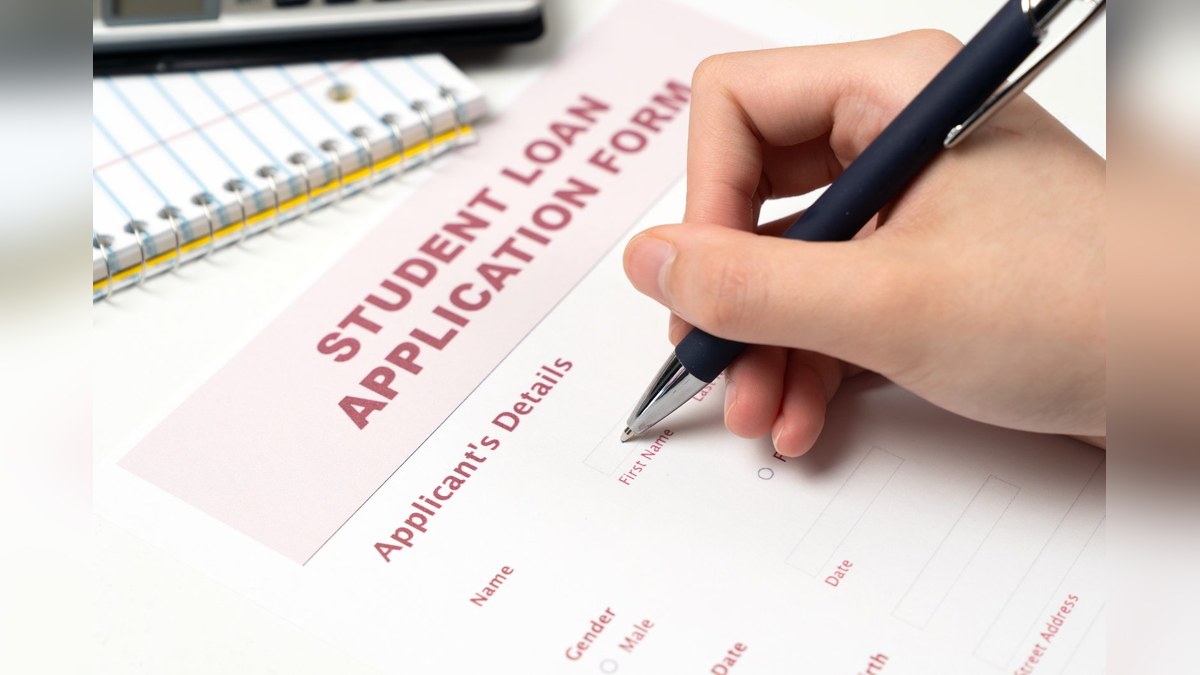
On 12 May 2026 Bangladesh Bank issued a circular that almost nobody in the study-abroad industry has told students about. From now on, every bank statement, solvency certificate and investment certificate a Bangladeshi bank issues for a visa application must carry a QR code that an embassy can scan and verify online. The scan returns your account number, account name, opening balance, closing balance and the date the statement was generated. Banks were given 90 days to build it. Those 90 days ran out in August.
You do not need Bangladesh Bank's prior approval to send tuition abroad for an undergraduate, postgraduate, pre-degree language or professional diploma course — your Authorised Dealer bank releases it against the institution's estimate. There is no published taka ceiling; the limit is time, not money, at one academic year at a time. Every payment for the whole course must come from one AD branch, through a Student File you are never allowed to hold. And the Tk 10 lakh collateral-free loan in the news is not a study-abroad loan.
What changed for bank statements in 2026?
The thing that has quietly ended a whole category of fraud. BRPD-1 Circular No. 12 of 12 May 2026 explains its own reasoning: embassies and visa centres had no way to check instantly whether a bank-issued document was genuine, and that was costing everyone time and administrative expense.
So the circular instructs every scheduled bank in Bangladesh that documents issued for a visa application must carry an online-verifiable QR code, and that scanning it must confirm at least five fields:
- Account Number
- Account Name
- Report Date Opening Balance
- Report Date Closing Balance
- Statement Generation Date
The data must stay verifiable for at least six months. Banks were given 90 days from the circular date to get their systems ready, and it was issued under section 45 of the Bank Company Act, 1991, effective immediately.
A doctored statement used to be a document problem. It is now a database problem. The embassy does not compare your paper against your bank's letterhead — it scans a code and asks your bank's own system what your closing balance actually was. Two things follow. First, anybody still selling arranged statements is selling you a refusal and a fraud record. Second, and far more usefully: a genuine statement is now easier to trust, which quietly helps honest applicants from Bangladesh. Ask your branch whether their visa statements carry the QR code yet, and do not accept one that does not.
Do you need Bangladesh Bank approval to send tuition abroad?
For a normal degree, no. The rulebook here is FE Circular No. 37 of 30 September 2025, whose paragraph 29 governs the release of foreign exchange for study abroad. It says Authorised Dealers "are allowed to release foreign exchange for admission and study by Bangladesh nationals in regular courses such as undergraduate, post graduate, language course pre-requisite to bachelor degree & professional diploma/certificate courses in recognized institutions abroad."
The exception is at the other end of the age range: "Prior approval of Bangladesh Bank is required to release foreign exchange for study of Bangladeshi students abroad at school level." School-level study needs approval. A Malta or Malaysia bachelor's does not.
Worth knowing: this circular also repealed the study-abroad instructions in the old Guidelines for Foreign Exchange Transactions 2018 that many bank pages and agency blogs still quote.
Is there a limit on how much you can send?
Not in taka, and this surprises people. The circular tells ADs to "issue foreign exchange as per estimate furnished by the educational institution". Your university's cost estimate is the ceiling. There is no per-student cap published anywhere in paragraph 29.
The real limit is time. The facility "will not be admissible for more than one academic year at a time", and each later release must take into account "the current progress report and current estimate" from the institution. So a four-year degree is four conversations with the same bank branch, each one requiring proof that you are actually progressing.
Where board, lodging and incidental expenses are not required to be paid to the institution itself, the circular allows foreign exchange on those counts to be issued in favour of the student, in the form of an international card. That is the legal basis for the money that actually lands in your hand abroad — and it is separate from your unused annual travel quota, which the circular also lets students draw on.
What is a Student File, and why can you never hold it?
Because it is a regulator's file, not a bank product. Paragraph 29(1)(viii) is unusually blunt: all purchases of foreign exchange for the entire duration of the course "should be from one AD bank branch", and if you want to change branch, "the relevant file shall be transferred direct to the concerned new AD branch on written request by the student. Under no circumstance should the file be handed over to the student."
ADs must keep "separate file for each student with all relevant papers in readiness for perusal by inspecting officials of Bangladesh Bank". So the Student File is an inspectable dossier that moves bank-to-bank and never through your hands. What the circular requires inside it is short: the Appendix-6 application, the original and photocopy of the admission letter, the original and photocopy of the institution's estimate of annual tuition, board, lodging and insurance, attested copies of your educational certificates, and a valid passport.

What does a Student File cost?
The regulator sets no fee, so each bank sets its own. These are taken from the banks' own websites, read on 28 September 2026 — none of them carries a last-updated date.
| Bank | Opening | Renewal |
|---|---|---|
| Eastern Bank | ৳8,625 incl. VAT | ৳7,475 incl. VAT |
| Prime Bank | ৳6,000 + 15% VAT | ৳6,000 + 15% VAT |
| Bank Asia | ৳5,500 | ৳5,000 |
| Standard Chartered | ৳5,750 incl. VAT | ৳5,750 incl. VAT |
Prime Bank also publishes ৳1,000 for closure, ৳2,000 to transfer a file and ৳500 for a file certificate. Standard Chartered publishes ৳575 including VAT per remittance, and lower annual rates for Priority and SAARC customers. Eastern Bank adds a requirement worth planning around: both the student and the financier must attend the branch in person to open the file.
Can you now pay a university by card?
Yes, and this is new. FEPD-1 Circular No. 29 of 10 August 2026 allows ADs to issue or enable designated international cards for overseas education payments, because foreign institutions increasingly demand card payment through their own admission and enrolment platforms.
Three details matter for a family. The card "may be issued as a debit, prepaid, or credit card". It "may be issued in the name of the student or the person bearing the student's educational expenses" — so a parent's card is expressly allowed. And transactions under this facility "shall not form part of any travel quota or other foreign exchange entitlements", meaning the education card does not eat into the travel allowance.
That travel allowance was itself raised three weeks ago. FEPD-1 Circular No. 33 of 6 September 2026 enhanced the annual travel entitlement from USD 12,000 to USD 18,000, with minors under twelve at 50 percent, and a cap of USD 5,000 in cash notes per person within that entitlement. At USD 1 ≈ ৳123, that is roughly ৳22 lakh a year of legal outbound travel money, of which about ৳6 lakh may be carried as notes — our arithmetic at the 28 September 2026 rate.
What about a visa bond or a blocked account?
Both are now expressly provided for, which matters for Malta, Cyprus, Italy and Germany files.
FE Circular No. 37 allows students required to deposit foreign currency into blocked accounts abroad, "in accordance with the guidance of foreign educational institutes/embassies/high commissions", to open such accounts and remit the amount "as set by foreign institutes/competent authority". No taka cap — the foreign authority's figure governs.
Separately, FEPD-1 Circular No. 09 of 11 May 2026 lets ADs remit visa bonds and refundable security deposits to embassies and high commissions, or preload an international card in the applicant's name with the bond amount. The bank must first verify your valid passport and "an official demand letter, invoice, or other relevant document" from the mission "clearly specifying the requirement of the visa bond or refundable security deposit, including the amount, currency, and refund terms", plus your visa application reference. And the money must come back: "The visa bond or security deposit shall be repatriated to Bangladesh immediately upon release by the concerned authorities."
Is the Tk 10 lakh collateral-free loan for studying abroad?
No — and this is the correction that matters most in this article, because the misinformation is everywhere.
The loan reported in the national press in late March 2026 is, by its own name, a loan for language education and special skills acquisition for the purpose of overseas employment. It sits under the Ministry of Expatriates' Welfare and Overseas Employment, and the corridors named in the reporting are Japan, South Korea, China and Germany, with language certificates such as JLPT N5 or TOPIK Level 3 required. Reported terms are up to Tk 10 lakh, 11% a year, maximum three years, applicants under 40. Those terms are press-reported; we could not open pkb.gov.bd at all from our environment, so no PKB figure here is verified on the official domain.
What is verifiable on a government domain is the shape of the product. The government's own myGov service portal lists the documents for the Probashi Kallyan Bank migration loan as passport, visa, BMET card and NID. A BMET smart card is issued to registered outbound migrant workers. A student going to a university in Malta or Italy does not have one, and cannot get one.
Only two publish a product that says so on their own site. ONE Bank describes its Student Loan as supporting higher education "at home and abroad", ৳50,000 to ৳20,00,000, up to 60 months, processing fee 0.50% capped at ৳15,000 — with the parent or guardian as borrower, minimum gross monthly income ৳25,000 salaried or ৳50,000 for business and professionals. Prime Bank publishes up to ৳20 lakh over five years alongside its Student File, plus an overdraft against fixed deposits. Neither publishes an interest rate. Nor does any other bank we checked. Every rate in this market is a branch conversation — which is worth knowing before you accept the first one you are offered.
What we could not verify, and one urgent caveat. FE Circular No. 37 of 30 September 2025 states that its instructions "will remain valid for one year from the date of its issuance" — that is on or about 30 September 2026. As of 28 September 2026 no replacement or renewal appeared in Bangladesh Bank's circular index. Confirm the position with your AD bank before acting on paragraph 29. Note also a naming trap: a different FEPD-1 Circular No. 37 dated 21 September 2026 concerns offshore banking units and is unrelated. We could not open pkb.gov.bd, probashi.gov.bd, wewb.gov.bd or mofa.gov.bd from our environment, so every Probashi Kallyan Bank figure above is press-reported and unverified on the official site, and we could not check whether any Bangladesh government scholarship for outbound study exists. We found no Bangladesh Bank rule governing the content, format or validity of a solvency certificate — it is a commercial practice and an embassy requirement, not a regulated instrument. Bank fee pages carry no last-updated dates. Dollar and taka conversions are our arithmetic at USD 1 ≈ ৳123 on 28 September 2026. All sources read 28 September 2026.
Official sources: BRPD-1 Circular No. 12 — verification of bank statements for visa applications · FEPD-1 Circular No. 29 — study abroad payments by international card · FEPD-1 Circular No. 33 — travel entitlement raised to USD 18,000 · FEPD-1 Circular No. 09 — visa bond and refundable security deposit
Related guides: Germany blocked account and proof of funds · UK student visa bank statement rules
Before you order a single bank document, let's map the money.
Which branch, which file, which estimate, and what the embassy will actually be able to scan — these decide a visa file long before anyone reads your personal statement. Bring us your admission letter and your bank, and we will map the whole payment path with you, honestly, including what it should cost.
Book Free Consultation →