
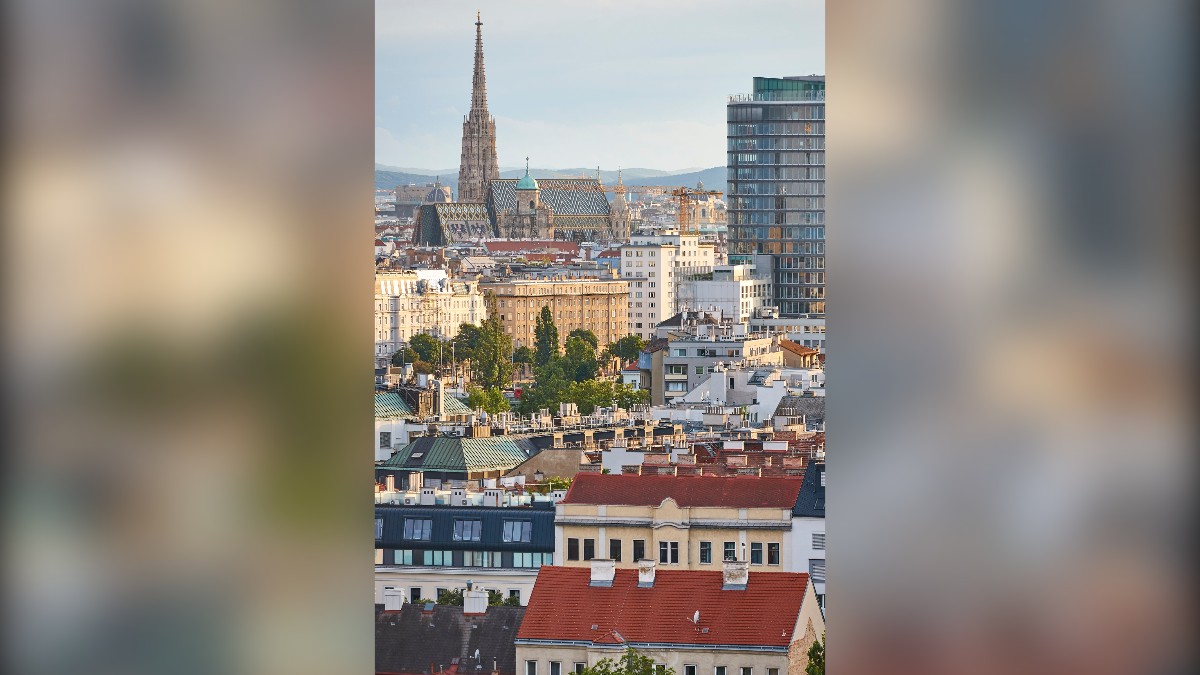
Most Bangladeshi students cross Austria off the list in about four seconds. Vienna, Alps, opera, Mozart — it sounds like a place that charges thirty thousand euros a year and asks for a bank statement your family could never produce. So the file never gets opened.
Here is the part almost nobody in Bangladesh has checked: Austria's own federal regulation lists Bangladesh among the countries whose citizens have the tuition fee waived entirely at public universities. Not discounted. Waived. A Bangladeshi passport holder studying a degree programme at the University of Vienna pays the student union due of EUR 26.20 a semester — and nothing else in tuition.
That single fact makes Austria one of the cheapest degrees in Europe for a Bangladeshi student, and it is why an Austria student visa from Bangladesh 2027 deserves a proper look. But the visa route has a trap in it that costs students an intake every year, and we will be blunt about that too.
Bangladeshi nationals are exempt from tuition fees at Austrian public universities under Austria's federal tuition regulation, paying only the ÖH student union due of EUR 26.20 per semester. For a degree longer than six months you need a Residence Permit – Student, not a visa, and it must be lodged in person at the Austrian Embassy in New Delhi. The fee is EUR 218 and processing takes up to 90 days.
Can a Bangladeshi student really study in Austria without paying tuition?
Yes — at public universities, and it is written into Austrian law rather than granted as a scholarship you have to win.
Austria's Federal Ministry (BMFWF) sets tuition at public universities at EUR 726.72 per semester for third-country degree students who hold a student residence permit. But the same regulation waives that fee for citizens of a defined list of countries, drawn from the OECD Development Assistance Committee's list of Least Developed Countries. Bangladesh is on that list.
The University of Vienna — Austria's largest, with the clearest published breakdown — spells it out on its own fees page. Under the heading of exceptions for non-EU/EEA nationals, it names Bangladesch among the countries whose students have the tuition fee waived for the entire duration of the degree programme. Those students pay only the ÖH due: EUR 26.20 a semester.
| Student | Tuition | ÖH due | Per semester |
|---|---|---|---|
| EU / EEA / Swiss | EUR 363.36* | EUR 26.20 | EUR 389.56 |
| Typical non-EU | EUR 726.72 | EUR 26.20 | EUR 752.92 |
| Bangladeshi | Waived | EUR 26.20 | EUR 26.20 |
*EU/EEA students pay nothing during the standard duration of study plus two tolerance semesters. Figures: University of Vienna, winter semester 2026/27.
At roughly BDT 144 to the euro — the rate VFS Global itself published for the Austrian visa fee — EUR 26.20 is about ৳3,800 a semester, or ৳7,600 for a full academic year. That is less than many Bangladeshi families spend on a single month of coaching.
What does an Austria student visa from Bangladesh actually cost in 2027?
Tuition is the cheap part. The permit, the proof of funds and the document work are where the money actually goes.
| Item | Amount | Approx BDT | Source |
|---|---|---|---|
| Residence permit fee | EUR 218 | ৳31,400 | OeAD, from 1 Jan 2026 |
| Visa D fee | EUR 195 | ৳28,080 | VFS Dhaka |
| VFS service charge | — | ৳9,158 | VFS Dhaka |
| Bank payment fee | — | ৳416 | VFS Dhaka |
| Tuition, per semester | Waived | ৳0 | BMFWF / Uni Wien |
| ÖH due, per semester | EUR 26.20 | ৳3,800 | Uni Wien |
The VFS charges are cash-only in Bangladeshi Taka, and the visa fee itself is revised against the exchange rate at each month end. Optional services sit on top: courier pass-back ৳1,300, SMS updates ৳576, form filling ৳535.
OeAD states it plainly: from 1 January 2026 the whole residence permit fee is paid at submission, and it is not refunded if the application is refused or withdrawn. Before 2026 it was split into two payments. This is a real reason not to lodge a weak file "just to try" — a refusal costs you roughly ৳31,400 plus the New Delhi trip.
Where do you apply for an Austria student visa from Bangladesh — Dhaka or New Delhi?
Both, in sequence — and getting this backwards is the single most common way Bangladeshi students lose an Austrian intake.
The Austrian Embassy in New Delhi is the mission accredited to Bangladesh. VFS Global runs an Austria Visa Application Centre in Dhaka at Delta Life Tower, 4th Floor, Plot 37, Road 90, Gulshan North, Gulshan-2, Dhaka-1212. So far this looks like a comfortable Dhaka process, and that is what most competitor pages tell Bangladeshi students.
The catch is what Dhaka can and cannot take. VFS Dhaka handles short-stay Schengen visas and the Visa D. But a degree programme runs longer than six months, and for that you do not need a visa at all — you need a Residence Permit – Student (Aufenthaltsbewilligung – Student). OeAD states that the residence permit application must be submitted in person at the competent Austrian representation, and the Austrian Embassy in New Delhi states that applications for residence permits exceeding six months must be made at the Embassy in New Delhi in person. Irrespective of where you live, you travel to New Delhi for that first appointment.

The appointment is not booked through a portal. You e-mail [email protected] with your name, postal address, phone number, passport number and your university and programme details, and wait to be offered dates.
How much money do you need to show, and for how long?
Austria ties the requirement to your age, and it wants twelve months proved in advance — not a snapshot balance.
| Applicant | Per month | For 12 months | Approx BDT |
|---|---|---|---|
| Under 24 | EUR 722.58 | EUR 8,670.96 | ৳12.5 lakh |
| 24 and over | EUR 1,308.39 | EUR 15,700.68 | ৳22.6 lakh |
| Each child | EUR 201.88 | EUR 2,422.56 | ৳3.5 lakh |
Note the jump at 24. A Bangladeshi student who finishes a bachelor's at 23 and starts a master's at 25 faces nearly double the requirement — worth planning around rather than discovering late.
The funds must sit in a savings book or bank account in the applicant's own name and be accessible from Austria. If your accommodation costs more than EUR 386.43 a month, you must show additional funds on top. Alternatives OeAD accepts include a declaration of guarantee (Haftungserklärung) from someone resident in the EU, or a confirmed scholarship.
Austria asks for the origin of the funds, not just the balance: six months of bank statements, a signed declaration of where the money came from, and proof of your sponsor's employment or business. A large deposit that appears three weeks before the appointment invites exactly the question you do not want. This is the single area where Bangladeshi files most often fall apart, and it is the part we spend the most time on with students.
Why won't your apostille work for Austria?
Because Austria formally objected to Bangladesh joining the system — and this catches almost everyone out.
The 1961 Apostille Convention entered into force for Bangladesh on 30 March 2025, and for most destinations that replaced the slow consular legalisation chain with a single apostille stamp. But under Article 12, an existing member can object, and the accession then simply does not take effect between those two countries. Austria lodged its objection on 23 December 2024.
The practical consequence: your Bangladeshi police clearance certificate, birth certificate and academic documents cannot be apostilled for Austria. They need the full consular legalisation route, and then a translation into German by a sworn, court-certified translator. OeAD warns that depending on the issuing country legalisation can take several months, and advises starting before anything else.
Austria is not alone in this — the Czech Republic and Estonia objected too, which is why our guides for those countries carry the same warning. If you have read that "Bangladesh now has apostille so documents are easy," that advice is simply wrong for Austria.
What are the 2027 application deadlines, and why are they earlier for you?
Third-country nationals get a shorter window than EU applicants — deliberately, to leave room for the permit process.
| Intake | Non-EU window | EU window | Semester starts |
|---|---|---|---|
| Winter 2026/27 | 22 Jun – 3 Aug 2026 | 22 Jun – 5 Sep 2026 | 1 Oct 2026 |
| Summer 2027 | 16 Nov 2026 – 7 Jan 2027 | 16 Nov 2026 – 5 Feb 2027 | 1 Mar 2027 |
Those are the University of Vienna's published dates. Every other university and every university of applied sciences sets its own, so confirm on your institution's admission page — but the pattern holds across Austria, and the university states there is no grace period whatsoever.
Now do the arithmetic that matters. Summer 2027 admission closes 7 January 2027 and the semester begins 1 March 2027. Between those dates you must obtain the admission letter, complete consular legalisation, get sworn German translations, secure a New Delhi appointment, travel there, and then wait up to 90 days for a decision. It does not fit. For a Bangladeshi student, Austria is realistically a winter-intake destination, planned close to a year ahead — and anyone promising you a summer-semester turnaround from a January admission is not counting the same calendar we are.
Can you work while studying in Austria?
Yes, up to 20 hours a week — but not automatically, and this is where Austria differs from most of Europe.
A Residence Permit – Student does not by itself grant the right to work. Your employer must apply to the Austrian Public Employment Service (AMS) for an employment permit (Beschäftigungsbewilligung). For up to 20 hours a week it is granted without a labour market test, but the AMS typically takes around four to six weeks to issue it. Beyond 20 hours, the AMS may run a labour market test to check whether a local candidate is available.
- Work rights are employer-applied, not student-applied — a casual cash job is not the model here.
- Budget for the AMS processing weeks before any income starts.
- Never plan your proof of funds around wages you have not yet been permitted to earn.
- Your permit renewal requires proof of academic progress — work that costs you your grades costs you the permit.
What happens after you graduate?
Austria gives graduates a year to find work, then a route to a proper work permit.
Before your student permit expires, you can apply to renew it for a further 12 months for job-seeking purposes — available after a bachelor's, a full master's, or a doctoral programme at an Austrian institution. If within those twelve months you hold an employment contract for at least 30 hours a week at a level matching your qualification, you can be issued a Red-White-Red Card for graduates, initially for 24 months.
That is a genuinely workable ladder, and it is a fair part of why Austria is worth the document effort. It is also why the German question matters: the tuition waiver applies to degree programmes generally, but the widest choice of programmes — and by far the widest choice of jobs afterwards — assumes German. English-taught master's programmes exist and are growing; English-taught bachelor's at public universities are much thinner on the ground.
What we see at Eduvisa
The pattern is consistent. A student comes in having read three or four Bangladeshi agency pages about Austria, and every one of them describes a straightforward Dhaka VFS application. Nobody has told them about the New Delhi appointment, nobody has mentioned that the apostille they just paid for is worthless for Austria, and nobody has warned them that the EUR 218 does not come back. They have usually also assumed the tuition is thousands of euros — so they are simultaneously too pessimistic about the cost and far too optimistic about the timeline.
Getting Austria right is not about knowing secret information. It is about sequencing: legalisation started early enough, funds seasoned in the right name for long enough, the appointment requested before the queue builds, and the intake chosen so the 90 days actually fit. That sequencing is case-specific — it depends on your age, your sponsor, your document set and your programme — and it is the part worth sitting down for.
Related guides: Czech Republic student visa from Bangladesh · Estonia student visa from Bangladesh
Official sources used in this guide: the Austrian Federal Ministry's tuition and course fees page and OeAD's Residence Permit – Student checklist.
Not sure whether Austria fits your file?
The tuition waiver is real, and for the right student Austria is one of the best-value degrees in Europe. Whether it works for you comes down to your age bracket, who is sponsoring you, what state your documents are in, and how much runway you have before the intake closes. Bring what you have — even if it is just a passport and a transcript — and we will map the honest timeline with you, including whether a different country would serve you better.
Book Free Consultation →