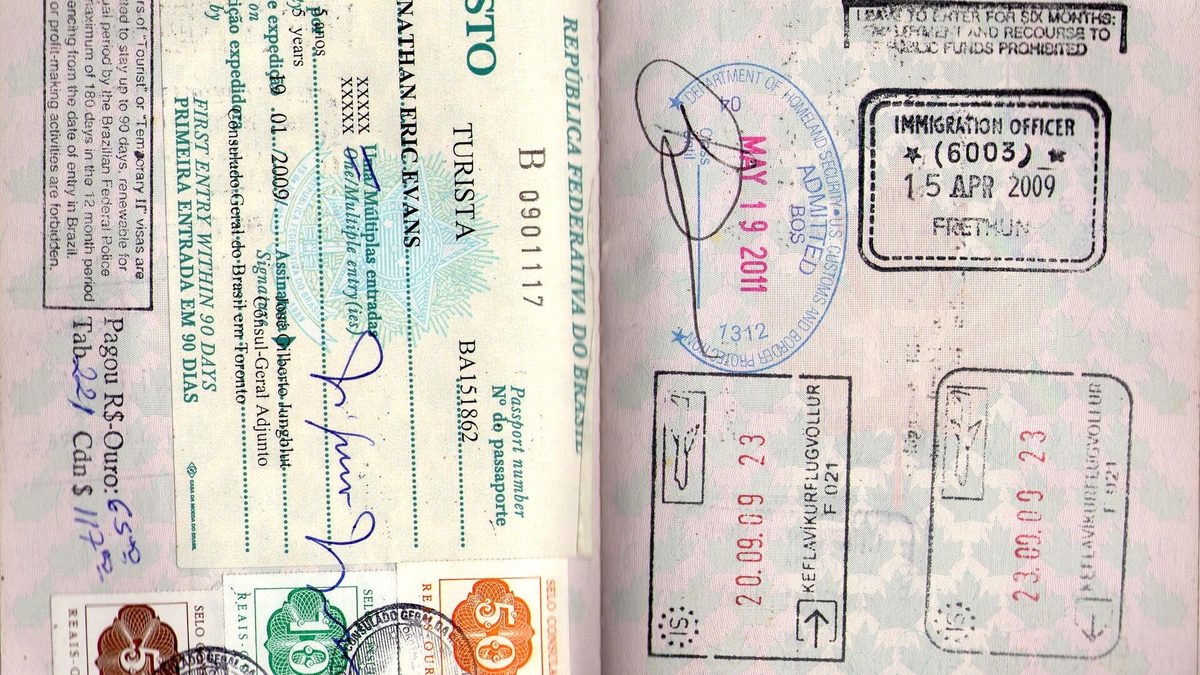

A student messages us from Limassol in her second month: a café on the seafront has offered her thirty hours a week, cash, starting Monday. She wants to know whether to say yes. The honest answer is no — and not because thirty is more than twenty. It is because in Cyprus the hours are only the third thing the law cares about. First it cares about which job, then about whose stamp is on the contract.
That is the part almost nobody explains before departure. The Cyprus student part-time work rules for Bangladeshi students in 2027 are not a simple hour count — they are a closed list of permitted occupations plus a compulsory approval step at a government employment office. Get either wrong and you are working illegally, even if you never exceed twenty hours.
Yes, third-country students in Cyprus may work part-time — but only in occupations named in the Minister of Labour's Decree, and only after a District Employment Office approves your signed employment contract. The cap is 20 hours a week while classes run and 38 hours a week when classes are interrupted. Working outside the list, or without approval, is a criminal offence.
Can Bangladeshi students work part-time in Cyprus in 2027?
Yes — the right exists, and it is written into Cypriot law rather than left to a university's discretion. The Department of Labour, part of the Ministry of Labour and Social Insurance, publishes the conditions on its own page for the employment of students from third countries, and the underlying statute is the Foreigners and Immigration Law of 2019 (N. 7(I)/2019), which transposes the EU rules on students and researchers.
What has changed over the last few years is how narrow that right has become. Cyprus used to allow international students a general thirty hours a week with no restriction on the industry. Today the permission is tied to a Decree of the Minister of Labour and Social Insurance published in the Official Gazette on 2 May 2024, and that Decree does two things at once: it sets the hours, and it names the exact occupations you may hold. Anything not named is closed to you.
How many hours a week can you work on a Cyprus student permit?
The Department of Labour states it plainly: employment must not exceed twenty hours a week during classes, and thirty-eight hours a week during the period of interruption of classes. Cyprus is therefore unlike Italy, where twenty hours is the ceiling all year round, and unlike Malaysia, where term-time work is not permitted at all.
One condition sits quietly underneath the hours and catches people out. Among the documents you must file is a timetable of studies which should not coincide with the working hours. In other words, your shifts have to be provably outside your teaching hours — a rota that overlaps a Tuesday morning lecture is a problem even if the weekly total is fifteen hours.
The 38-hour rate applies during official breaks, and instead of a timetable you submit a vacations confirmation letter from your institution. That letter is what makes the higher rate lawful — an employer's word that "it's the holidays now" carries no weight with the Labour Department.
Which jobs are Bangladeshi students actually allowed to do in Cyprus?
This is the single biggest gap between what students expect and what the law allows, and it is where we spend most of our pre-departure counselling. The Decree lists eight economic activities and, inside each, specific occupations. If your job title is not on this list, no employer and no employment office can authorise it.
| Sector | Permitted occupations |
|---|---|
| Trade & repairs | Retail salesperson (subject to advance labour-market control), loading/unloading porter, gas station and car wash worker |
| Health & social care | Caregiver in homes for the elderly (subject to the relevant legislation), ward assistant in clinics (secondary school certificate plus elementary Greek) |
| Household | Occasional work of a domestic nature |
| Manufacturing | Bakery worker, forage production labourer, recycling labourer, night shift worker in manufacturing |
| Agriculture | Agriculture, animal husbandry and fishery labourer, animal caregiver |
| Services | Building cleaner, sewer worker, advertising and informative material distributor, ready food deliverer |
| Food sector | Kitchen assistant, cleaner, ready food deliverer, waiter and barman — the last two exclusively in restaurants and recreational centres |
| Hotel sector | Kitchen assistant, cleaner, bedroom cleaning worker, waiter, receptionist, barman |
Read the food-sector row twice. "Waiter" and "barman" are permitted exclusively in restaurants and recreational centres. The same job title in a setting that is neither is not covered — a distinction that sounds academic until an inspector disagrees with your employer's description of the premises.
No office or administrative work. No IT, software or design work. No private tutoring or teaching. No customer-service or call-centre roles. No self-employment, freelancing or "contractor" arrangements. No driving jobs beyond food delivery. If someone in Bangladesh has told you that a Cyprus student permit lets you freelance online or work in a tech startup, they are describing a country that is not Cyprus.
How does your employment contract get approved?
Cyprus does not use a separate "work permit card" the way Malta does. Instead, your specific contract with your specific employer is checked and approved by the state before it becomes lawful. The Department of Labour sets out the documents and the route.
- A valid student permit issued by the Immigration Authorities
- An employment contract signed by both you and the employer
- A certificate of full-time studies from your institution
- A timetable of studies that does not clash with the working hours — or, during breaks, a vacations confirmation letter
- The application form that accompanies the above
- Land, and register first. Your temporary residence permit — the "Pink Slip" — must be applied for with the Civil Registry and Migration Department within seven days of arrival. Nothing else in this process can start without a valid student permit behind it.
- Find a job that is genuinely on the list. Match the actual job title, not the vibe of the job. Ask the employer to name the occupation as it appears in the Decree.
- Sign a written contract. Both parties sign. A verbal agreement or a WhatsApp message is not a contract for this purpose, and cash-in-hand work cannot be approved at all.
- Collect your study documents. Certificate of full-time studies and your timetable, from the registrar — allow a few days.
- Submit to a District Employment Office. The application and the contract go in together. The Labour Department then checks the main conditions of the contract.
- Wait for approval before your first shift. If the Department is satisfied, the contract is approved. Only then is the work lawful.
How much can you realistically earn from part-time work in Cyprus?
Cyprus has had a national minimum wage since 2023, and it rose again at the start of this year. Under a Council of Ministers Decree published in the Government Gazette on 31 December 2025, from 1 January 2026 the minimum monthly wage for full-time work is €1,088, and €979 for employees who have not yet completed six months of continuous employment with the same employer.
The provision that matters most to a student is the part-time rule: for part-time employment, the minimum monthly wage is adjusted proportionately to the hours worked against the applicable full-time hours. So a twenty-hour week is not paid at a special student rate — it is paid at the same rate per hour, scaled down.
If the full-time norm in your workplace is 38 hours, a 20-hour week is 20/38 of full time. That is roughly €515 a month (≈ ৳72,300) in your first six months and €573 a month (≈ ৳80,400) after six months with the same employer — about €5.95 and €6.61 an hour respectively. During a break at 38 hours, the same rate is roughly €251 a week (≈ ৳35,300). These are our calculations from the statutory monthly figures at ৳140.4 per euro on 28 July 2026, not published hourly rates; full-time hours differ by sector, so your real figure will differ.
Now the carve-out that catches students hardest. The national minimum wage Decree does not cover every sector — hotel-industry employees, domestic workers, agricultural and livestock workers and seafarers sit outside it, with pay set by separate decrees or collective agreements instead. Look back at the permitted-occupations table: the hotel sector, agriculture and domestic work are all on it. The single most common student job in Cyprus is in a sector where the headline minimum wage is not the number that governs your pay. Ask what does, in writing, before you sign.
What gets deducted from a Bangladeshi student's pay in Cyprus?
Gross is not net, and students routinely budget on the wrong one. Two deductions apply from the first euro. Social Insurance is charged at 8.8% of gross pay on the employee side — a rate fixed from January 2024 and held for five years — and the General Healthcare System (GESY) takes a further 2.65%. Together that is about 11.45% off the top.
Income tax is the good news. Cyprus's 2026 tax reform, published in the Official Gazette on 31 December 2025 and effective from 1 January 2026, raised the tax-free threshold from €19,500 to €22,000, with 20% applying only above that. A student earning six or seven thousand euros a year is comfortably below it and will owe no income tax — though the social and health contributions still come out. On our figures, €573 gross becomes roughly €507 (≈ ৳71,200) in hand.
Do you have to wait six months before you can work?
You will read almost everywhere that Bangladeshi students must complete six months of study in Cyprus before they can take a job. We could not find that condition on the Department of Labour's own page, which lists a valid student permit, a signed contract, a full-time study certificate and a compatible timetable — and does not mention a waiting period. It may well exist elsewhere in the immigration framework or in practice at the employment offices.
How does Cyprus compare with Malta, the UK, Italy and Malaysia?
Across Eduvisa's five countries, the hours look similar and the machinery around them does not. Cyprus is the only one of the five that restricts you to a published list of occupations.
| Country | Term time | Breaks | Job list? |
|---|---|---|---|
| Cyprus | 20 hrs | 38 hrs | Yes — closed list |
| Malta | 20 hrs* | 40 hrs* | No, but licence needed |
| UK | 20 hrs | Full-time | No |
| Italy | 20 hrs | Still 20 hrs | No |
| Malaysia | Not allowed | 20 hrs | Yes — limited sectors |
*Malta's specific hour figures remain unconfirmed against a primary source; what is confirmed is that a separate Employment Licence is required there. See our Malta guide for the detail.
What happens if you work outside the rules?
The Department of Labour is blunt: the Law provides for punishment — fine or imprisonment — for those who violate its provisions. That exposure is not limited to the employer. And the practical consequence lands earlier than any court case: your Pink Slip is renewed annually, and a file that shows unauthorised employment is a file that invites refusal. A student who loses residence status halfway through a degree loses the degree too.
Part-time earnings in Cyprus cannot be offered as proof of funds for your student visa. Your application is lodged at the VFS Global centre in Gulshan-2 and decided by the High Commission of the Republic of Cyprus in New Delhi, and it is assessed on money your family can show before you travel. Any agent who tells you "work will cover it once you land" is selling you a refusal.
What we see at Eduvisa
The students who settle fastest in Cyprus are the ones who treated the first two months as admin, not as a job hunt. Pink Slip filed inside seven days, bank account opened, study certificate collected early — and then a job search aimed at the list rather than at whatever came up first. The ones who struggle are usually the ones who accepted an informal arrangement in week three because the rent was due, and then spent the rest of the year unable to switch to a legal contract without explaining the gap. The rules are restrictive, but they are knowable in advance, and knowing them is most of the advantage.
Related guides: Cyprus cost of living and student budget · Cyprus student visa: the complete guide
Official sources: Cyprus Department of Labour — Employment of Students from Third Countries · Study in Cyprus (official portal)
Let's check your job offer before you sign it
A twenty-hour week can take real pressure off your family — but only if the occupation is on the list and the contract is approved. Send us the job title and the contract, and we will tell you whether it fits before you start. And if you are still at the planning stage, bring us your course and your family's funding position and we will build the year around numbers that actually hold up in New Delhi.
Book Free Consultation →