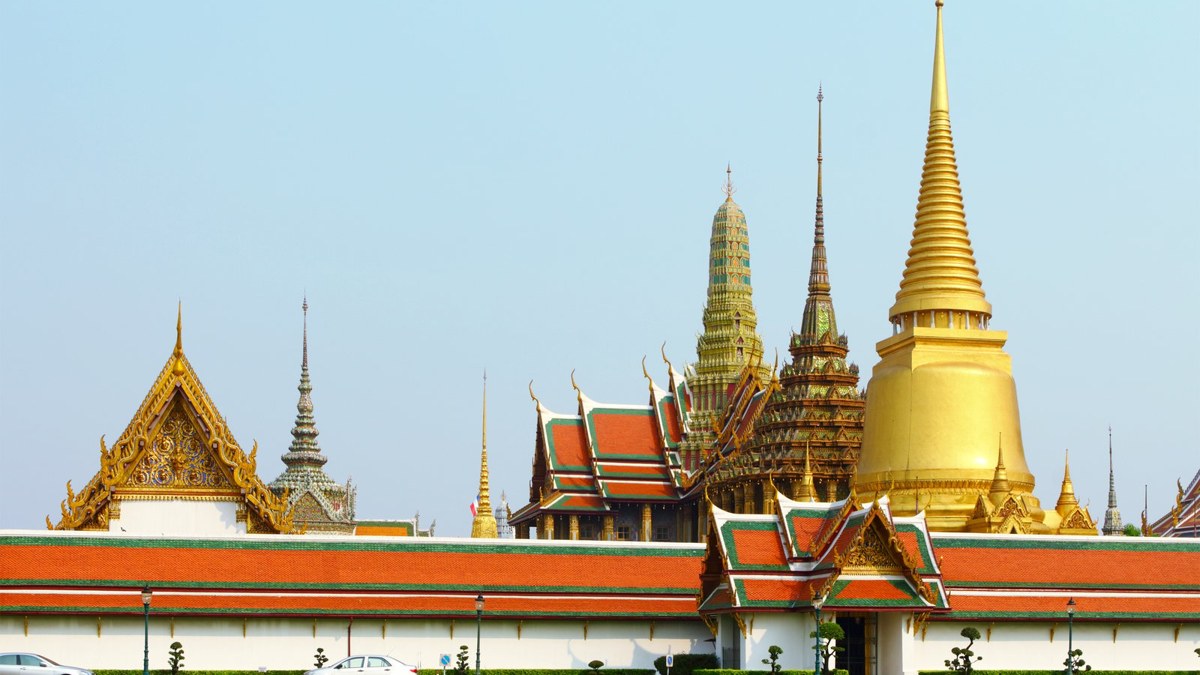
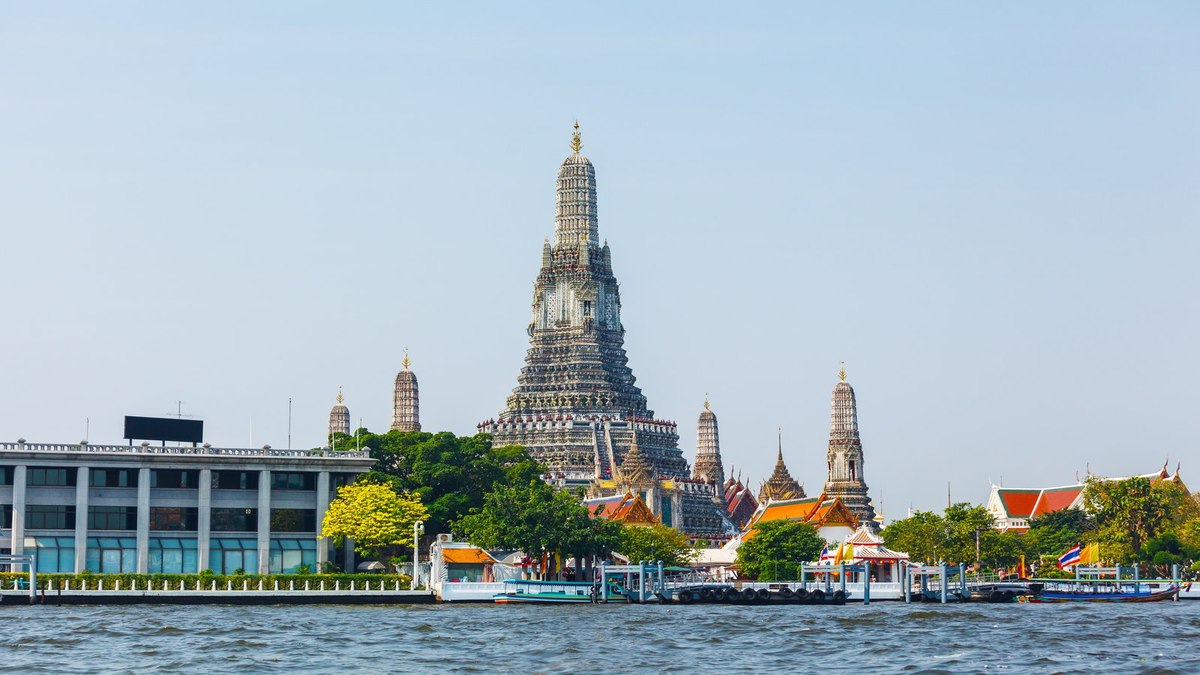
Most Bangladeshi families already know Bangkok — it is the transit airport, the medical-treatment trip, the first stamp in a new passport. What almost nobody knows is that the same city runs degree programmes taught entirely in English, and that the Royal Thai Embassy sits on Madani Avenue in Baridhara, a twenty-minute drive from Gulshan. For a Thailand student visa from Bangladesh, you do not fly to New Delhi. That alone puts Thailand in a different category from most of the affordable destinations we research.
To study in Thailand from Bangladesh you need a Non-Immigrant "ED PLUS" visa, issued by the Royal Thai Embassy in Dhaka for bachelor's-degree study and above. The embassy's own checklist asks for an admission and enrolment letter from the Thai institution and proof of funds of at least 60,000 Taka per person. The visa is single-entry, valid three months; your university then files your extension.
Is there really a Thai embassy in Bangladesh, or do I apply through India?
There is a real one, and it issues visas itself. The Royal Thai Embassy is at 18 & 20 Madani Avenue, Baridhara, Dhaka-1212, open Sunday to Thursday, 09:00–13:00 and 14:00–17:00. Its consular section publishes its own visa checklists, including the one for students.
This matters more than it sounds. Across the affordable study destinations we have researched for this blog — Armenia, Azerbaijan, Kazakhstan, South Africa, Mauritius — the pattern is almost always the same: no mission in Bangladesh, so the file goes to New Delhi, which means an Indian visa, a flight, a hotel and a queue before the study visa process even begins. Thailand breaks that pattern. Your documents are assessed in Dhaka, by officers in Dhaka.
Which visa do I actually apply for — ED or ED PLUS?
The Dhaka embassy's published student category is Non-Immigrant Visa "ED PLUS", and its own sheet states the scope plainly: Education for Bachelor degree and above only. It is issued as a single entry, three-month visa, and must be used within 90 days of the issue date.
Two features of ED PLUS are genuinely better than the older education visa, and both come straight from the embassy's sheet:
- Holders can leave and re-enter Thailand without a re-entry permit during the course of study — a real saving for students who come home for Eid.
- Once you hold ED PLUS, the university submits your extension application on your behalf. You are not the one filing at Immigration each year.
The embassy's ED PLUS sheet states that the visa "allows holder to extend their stay in Thailand for 1 year after graduation, to seek employment, travel or take part in other activities, and are eligible to change the type of visa in Thailand if employed." Most Bangla-language content about Thailand still says there is no stay-back at all. There is — for ED PLUS holders at bachelor's level and above.
How much money do I have to show, and in which currency?
Here is the detail that makes the Dhaka embassy's sheet worth reading in the original: it quotes the financial requirement in Taka as well as Baht. The wording is "at least 20,000 Baht per person and 40,000 Baht per family OR 60,000 Taka per person and 120,000 Taka per family."
The evidence itself is specific. The embassy asks for a current Bank Solvency Certificate and a bank statement covering the last six months "with satisfactory transaction", and states that only original bank statements and solvency letters are acceptable. If a company is sponsoring the applicant and submits its own statement and solvency letter, a trade licence must be attached.
Read that number carefully. ৳60,000 is what the embassy asks you to show at the visa counter — it is not what a year in Thailand costs, and it is not a guarantee of approval. Tuition, accommodation and living costs are separate and much larger, and the sheet ends with the line that consular officers reserve the right to request additional documents. Treat the ৳60,000 as a floor, never as a budget.

What exactly does the Dhaka embassy's checklist ask for?
The consular section publishes the ED PLUS requirements as two scanned pages. We read them and transcribed the list:
- Application form, completely filled out and signed by the applicant
- A visa request letter from the applicant stating the purpose
- Passport valid for travel with not less than six months remaining
- One set of photocopies: passport information page, last Thai visa page and renewal page (if any)
- Two colour passport-sized photographs, 3.5 × 4.5 cm, white background, taken within the past six months
- Evidence of adequate finance — original Bank Solvency Certificate and six-month bank statement (৳60,000 per person / ৳120,000 per family, or the Baht equivalents)
- A letter from the Thai university or institution
- A letter confirming enrolment details, signed by an authorised person, together with a copy of that signer's ID card or passport
- A copy of the air ticket, booking confirmation or itinerary
That second-to-last item catches people out. It is not enough for your Thai university to send an enrolment letter; the embassy wants proof of who signed it. If your institution's international office does not routinely attach the signatory's ID, ask for it before you book an appointment.
Do my Bangla documents need an apostille?
Not yet — and this is the single most time-sensitive fact in this guide. Bangladesh joined the 1961 Apostille Convention on 30 March 2025, and for most destinations that replaced the old embassy-legalisation chain. Thailand was not a party to the Convention until very recently.
According to the Hague Conference on Private International Law, Thailand deposited its instrument of accession on 30 June 2026, and the Convention enters into force for Thailand on 28 February 2027. Until that date, the apostille route does not operate between the two countries.
What the Dhaka embassy asks for in the meantime is set out in its own note: short English descriptions for all Thai documents, and for documents in other foreign languages "including Bangla", translation into English certified by a credible translator and a notary public.
If you submit before 28 February 2027, plan for notarised certified translations. If you submit after, the apostille route should be available — but confirm with the embassy on the day rather than assuming, because missions update their published checklists at their own pace. This is exactly the kind of moving target we track for students, and the reason we tell people not to prepare documents six months early.
How much is tuition at a Thai university?
Thailand's public universities publish their international rates openly, which is refreshing. Chulalongkorn University, the country's most prominent, sets undergraduate tuition for international degree-seeking students by faculty group:
| Faculty group | THB / semester | Note |
|---|---|---|
| Life Science (1) — medicine, dentistry, veterinary | 106,000 | Highest band |
| Life Science (2) — pharmacy, nursing, allied health | 82,700 | Mid |
| Physical Science — engineering, science, architecture | 79,500 | Mid |
| Social Science | 76,000 | Lowest band |
| Arts and Humanities | 76,000 | Lowest band |
The university's own page adds a caveat that most agent websites drop: these figures exclude programme fees, which are charged on top and run from 70,000 to 141,500 THB at undergraduate level — with one medical programme at 570,000. In other words, the headline tuition is roughly half the real bill for many programmes.
One honest flag about the source: Chulalongkorn's fee page converts its Baht figures to US dollars using an exchange rate dated 12 April 2023. The Baht amounts are the authoritative ones; ignore the dollar column, and never convert to Taka from a three-year-old rate. We quote no BDT tuition figure here for that reason.
For living costs the same university page gives: books about 5,000 THB per semester, food and personal expenses from 10,000 THB per month, and dormitory accommodation around 15,000 THB per month including electricity and water.
Can I work part-time in Thailand on a student visa?
Plan on the answer being no. Thai law separates the right to stay from the right to work: an education visa carries no work authorisation, and paid work without a work permit is an offence that can end in a fine, cancellation of your status and removal. The narrow exceptions discussed by Thai legal practitioners involve internships that form part of your approved curriculum, and employment with companies holding Board of Investment privileges — neither of which is a route an ordinary undergraduate can rely on.
We could not verify the work-rights position from a Thai government page in English during research, so treat the paragraph above as the consistent reading of Thai law by practitioners rather than as a cited official rule. What is certain is the direction: do not build a budget that assumes part-time earnings in Thailand. Confirm your specific case before you rely on it.
What does the process look like, step by step?
Is Thailand actually a sensible choice for a Bangladeshi student?
It is a serious one if your programme is taught in English, your family can fund it without counting on part-time work, and you value being three and a half hours from home. It is a poor choice if your plan depends on earning while studying, or if you are looking below bachelor's level, where ED PLUS does not apply.
What we see at Eduvisa is that Thailand gets dismissed early in family conversations because people assume it is a tourism country, not a study country — and then gets reconsidered once someone actually reads the embassy's own sheet and notices the Taka figure and the post-graduation year. The information is public. What takes time is matching a specific student's marks, budget and subject to a programme that will admit them, and building a money file that reads as genuine.
Related guides: How to study abroad cheaply from Bangladesh in 2027 · The Malaysia student visa process — the closest comparison in the region, and the one most families weigh Thailand against.
Not sure whether Thailand fits your marks and your budget?
Bring your transcripts, your IELTS result if you have one, and an honest picture of what your family can fund. We will tell you plainly whether a Thai programme is realistic for you, what your document file is missing, and what the timing means now that the apostille date falls in the middle of the 2027-28 intake season. If Thailand is the wrong fit, we will say so and show you what is closer.
Book Free Consultation →Note: This is blog research for Bangladeshi students, not a statement that Eduvisa currently processes applications for Thailand. Visa rules, fees and checklists change. Verify every figure with the Royal Thai Embassy in Dhaka and your university before acting. Sources used here: the Royal Thai Embassy Dhaka consular pages (dhaka.thaiembassy.org), Chulalongkorn University's tuition page (chula.ac.th, updated 21 May 2026), and the HCCH announcement of Thailand's accession to the Apostille Convention.